Slint (Post Hardcore)
English version · automatic translation
Anachronique: Slint (Post Hardcore)
Slint, they were just kids. Slint is a band formed in Louisville in 1987 by a group of friends who were teenagers at the time. The band only ever released two albums, Tweez (1989) and Spiderland (1991), which has just been reissued on Touch and Go Records. Today you can stick a lot of labels on Slint’s music: Post Hardcore, Math Rock, Post Punk, Post Rock and so on. In reality, when its two records came out, few cared what Slint might represent. The band drew only small crowds, and its popularity was closer to zero than anything else. But there you go, the 20 years since Slint’s last album came out have made it a cult band. It played in Louisville last week, the perfect occasion to discuss this major band in the history of experimental music.
Slint’s two records are not instant. It takes time to make them your own, time for the ear to get used to this aggression running on alternating current. Its second record, Spiderland (1991), is to this day the more cult of the two. And yet Tweez holds its own. Time for a track-by-track review? Here we go:Tweez (1989). “Ron” is the first track on the album. Slint gets straight to the heart of the matter without bothering to take the slightest precaution. Punk, the real deal. The band seems as surprised as we are, delivering an “oh, hen, alright“, as if to say: oh, you want a bit of music? Here it is. Produced by Steve Albini, producer of the Pixies, Nirvana and so on, this album sounds like nothing we have ever heard.
After the gripping intro of “Ron” comes a “Nan Ding” that reveals what this album is: the bass takes the lead with many changes of rhythm, Brian McMahan talks more than he sings and the guitar sound is aggressive. “Carol” is a touch more impressive. The post-apocalyptic atmosphere Slint gives off is enough to frighten. You listen to this track when the urge for aggression makes itself felt, drawing closer to the world of Dinosaur Jr. Next comes “Kent” and its creepy sounds, “Kent” and its sound effects, another surprising track. Slint makes its music a texture capable of every variation, every excess, and it is with an attentive ear that you listen to this track as to the rest of the album. The second part of the track is gripping, to say the least. Brian orders us “don’t worry about me“, and then the guitar does its undermining work to perfection. And then it’s “Charlotte“’s turn to set the tone, an experimental post rock track that reminds us of Thurston Moore’s wanderings. That is without counting on the sudden restart at the 4th minute, Fugazi-style. Next comes “Darlene“, a spoken track that contrasts with the deafening guitar of the two tracks surrounding it. “Pat“, the penultimate song, destroys every code to form more than three absolutely innovative minutes, the kind of track you remember with no effort. And then “Rhoda” closes the album with a piece even more experimental than the others, which, one last time, varies its instrumentation to make our panicked souls skip.
This record gives off a very heavy atmosphere, sometimes Dinosaur-like, sometimes Sonic Youth-like, other times Fugazi-like, but never without the guitar speeding up too much, never without Brian McMahan needing to push his voice too much. It is surprisingly powerful and well thought out. Note that the track titles are taken from the names of the Slint members’ parents, except for “Rhoda”, which was the name of the dog of the band’s drummer, Britt Walford. Originally released on Jennifer Hartman Records, the album was reissued on Touch and Go Records in 1993. This album would deserve plenty of golden palms. Still in Rock awards its own.Spiderland (1991), or the dynamics of silence. Funny how the first three notes of an album can give it its sonic identity. Recorded in 1990, Spiderland came after the band interrupted its tour for Tweez because of… going back to College. Recorded in just 4 days, many rumours still persist about what supposedly happened in the studio during that period: psychiatric hospital for one member of Slint, fights, depressions…?!
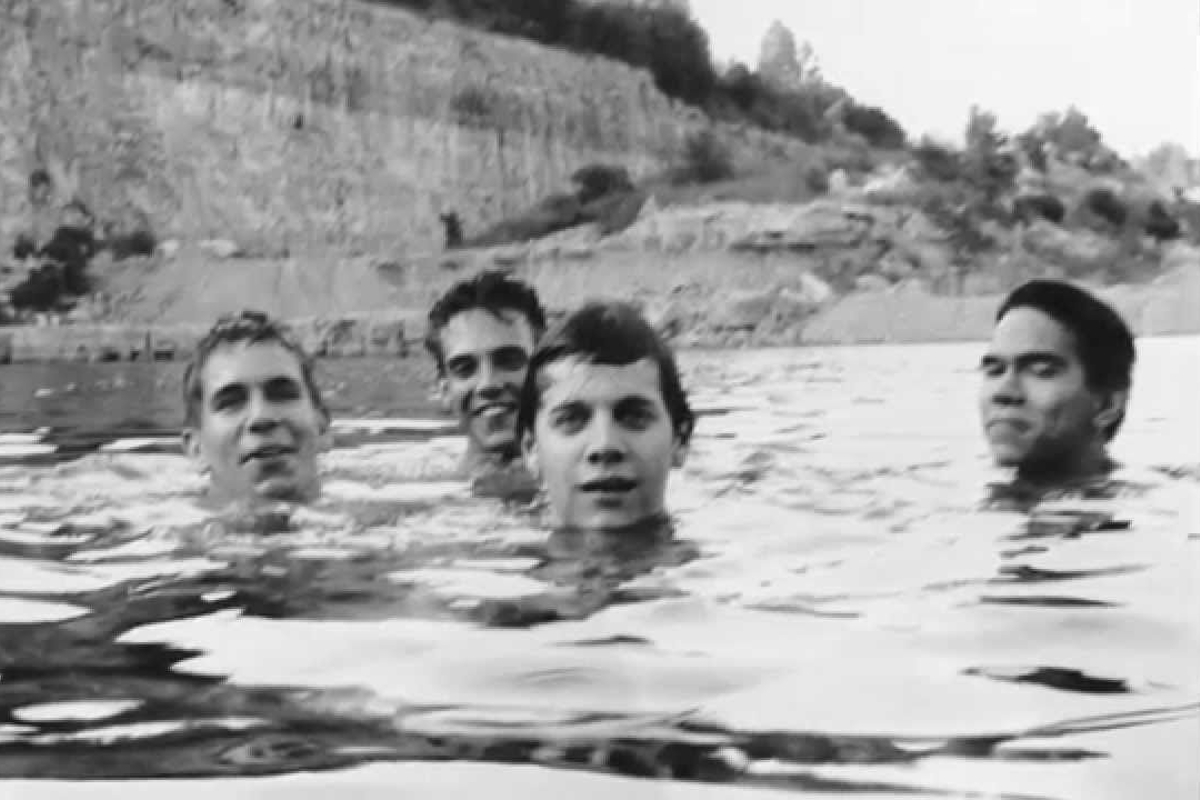
“Breadcrumb Trail” seems to be made of a less dark sound than Tweez. And yet Slint hasn’t lost any intensity. “Nosferatu Man” incorporates a huge amount of Math Rock, the scattered sounds end up forming a whole of incredible complexity. This song is certainly one of the very best in Slint’s discography. Its finale is high-flying jubilation. “Don, Aman” is one of the calmest tracks in the band’s history. There are no drums, Slint seems the polar opposite of Tweez, an illusion. “Washer” is the only sung track on all of Slint’s albums. You find a rare sensitivity in it. The music of this song fits perfectly with the album cover, taken by Will Oldham in the lake of an abandoned quarry. Slint seems as innocent as it is unsettling. You get the feeling that what is left unsaid takes up more space than everything else. Listen carefully to the build-up that forms at the 7th minute: have you ever heard more gripping music? “For Dinner…“, in the same vein as “Don, Aman“, makes way for restful music where the guitar does the job superbly. “Good Morning, Captain” is the band’s last track, apart from their Untitled Slint EP (1994), which would include Tweez outtakes. Some CD versions of Spiderland included a message saying: “this recording is meant to be listened to on vinyl“. That says it all.
Slint wears the Post Hardcore label superbly. You would think you were hearing a War Punk band worn out by years of practice. And yet, let me remind you again, the band recorded everything when its members were just teenagers. A documentary just released about the band’s history, titled Breadcrumb Trail, explains the general astonishment when the World discovered that this music came from “kids”. The maturity of Slint’s music could indeed suggest the opposite, so few equals do the blackish atmospheres of these two records have. Probably for that reason, Slint earned the respect of the biggest names. Lou Barlow, of Dinosaur Jr., said that this album fluctuates “from calm to rage without sounding like grunge or indie rock. It sounded more like a new kind of music“. As for Bob Nastanovich (Silver Jews and Pavement), he did not hesitate to say that it is one of his favourite albums. Many other legendary artists would declare their love for Spiderland, Tweez, and Slint. Today, I hope you will give it yours.
Related links:
List of ALL the anachronique articles
Anachronique article on Dinosaur Jr. (1985)
Original version (French)

Après l’introduction poignante de “Ron” arrive un “Nan Ding” révélateur de ce qu’est cet album : la basse prend le lead avec de nombreux changements de rythmes, Brian McMahan parle plus qu’il ne chante et le son des guitares est agressif. “Carol” est un brin plus impressionnant. L’ambiance post apocalyptique que dégage Slint à de quoi effrayer. On écoute ce titre lorsque l’envie d’agressivité se fait entendre, en se rapprochant de l’univers de Dinosaur Jr. Vient ensuite “Kent” et ses creepy sounds, “Kent” et ses bruitages, encore un titre surprenant. Slint fait de sa musique une texture capable de toutes les variations, de tous les excès, et c’est l’oreille attentive que l’on procède à l’écoute de ce titre comme du reste de l’album. La deuxième partie du titre est pour le moins prenante. Brian nous ordonne “don’t worry about me“, et ensuite, la guitare fait son travail de sape à la perfection. Et puis, c’est au tour de “Charlotte” de venir donner le LA, titre de post rock expérimental qui nous rappelle les égarements de Thurston Moore. C’est sans compter sur la reprise soudaine de la 4eme minute, façon Fugazi. Vient ensuite “Darlene“, un titre parlé qui tranche avec la guitare assourdissante des deux titres qui l’entoure. “Pat“, l’avant-dernier morceau, détruit tous les codes pour former plus de trois minutes absolument novatrices, le genre de titre dont on se souvient sans peine. Et puis, “Rhoda” conclut l’album sur une pièce encore plus expérimentale que les autres, qui, une dernière fois, fait varier son instru’ pour faire sautiller nos âmes affolées.
“Breadcrumb Trail” semble être fait d’un son moins noir que celui de Tweez. Pourtant, Slint n’a pas perdu en intensité. “Nosferatu Man” intègre énormément de Math Rock, les sonorités éparses finissent par y former un tout d’une incroyable complexité. Ce morceau est assurément l’un des tout meilleurs de la discographie de Slint. Son final est une jubilation de haut vol. “Don, Aman” est l’un des titres les plus posé de l’histoire du groupe. Aucune batterie n’est présente, Slint semble aux antipodes de Tweez, un leurs. “Washer” est le seul titre chanté de tous les albums de Slint. On y trouve une rare sensibilité. La musique de ce morceau colle parfaitement à la pochette de l’album prise par Will Oldham dans le lac d’une carrière abandonnée. Slint y semble innocent autant qu’inquiétant. On a l’impression que les non-dits occupent une place plus importante que tout le reste. Ecoutez bien la montée en puissance qui se forme à la 7eme minute : avez-vous déjà entendu une musique plus poignante ? “For Dinner…“, dans la même veine que “Don, Aman“, laisse place à une musique reposante où la guitare fait superbement le boulot. “Good Morning, Captain” est le dernier titre du groupe, mise à part leur Untitled Slint EP (1994) qui comprendra des chutes de Tweez. Certaines versions CD de Spiderland comprendront un message disant : “this recording is meant to be listened to on vinyl“. Tout est là.
Slint porte superbement l’étiquette de Post Hardcore. On croirait entendre un groupe de War Punk fatigué par des années d’exercice. Pourtant, je le rappelle encore, le groupe a tout enregistré lorsque ses membres n’étaient qu’adolescents. Un documentaire qui vient de paraître sur l’histoire du groupe, intitulé Breadcrumb Trail, explique l’étonnement général lorsque le Monde découvrait que cette musique émanait “d’enfants”. La maturité de la musique de Slint pourrait effectivement laisser penser l’inverse tant les ambiances noirâtres de ces deux opus n’ont que peu d’égaux. Pour cela, probablement, Slint a suscité le respect des plus grands noms. Lou Barlow, de Dinosaur Jr., déclarera que cet album fluctue “du calme à la rage sans sonner comme du grunge ou du rock indé. Il sonnait davantage comme un nouveau genre de musique“. Quant à Bob Nastanovich (Silver Jews et Pavement), il n’hésitera pas à affirmer qu’il s’agit de l’un de ses albums préférés. Bien d’autres artistes légendaires déclareront leur amour à Spiderland, Tweez, et Slint. Aujourd’hui, j’espère que vous lui donnerez le vôtre.
Liens afférents :
Liste de TOUS les articles anachroniques
Article anachronique sur Dinosaur Jr. (1985)