
Anachronique ·

Tom Waits (Blues Jazz)
English version · automatic translation

Anachronique: Tom Waits (Blues Jazz)

Tom Waits, or the beat generation set to music. The anachronique section is already full of great legends who shaped the history of music. This post certainly joins the most important of them. The great Tom Waits is a major artist of the 20th century who keeps producing excellent albums (the latest is Bad as Me, 2011). To date he has more than 15 records and his music keeps showing that the boundaries between Jazz, Blues, Soul and Rock ‘n’ Roll are in reality very slim. After all, which jazzman is more rock’n’roll than him? Probably none.

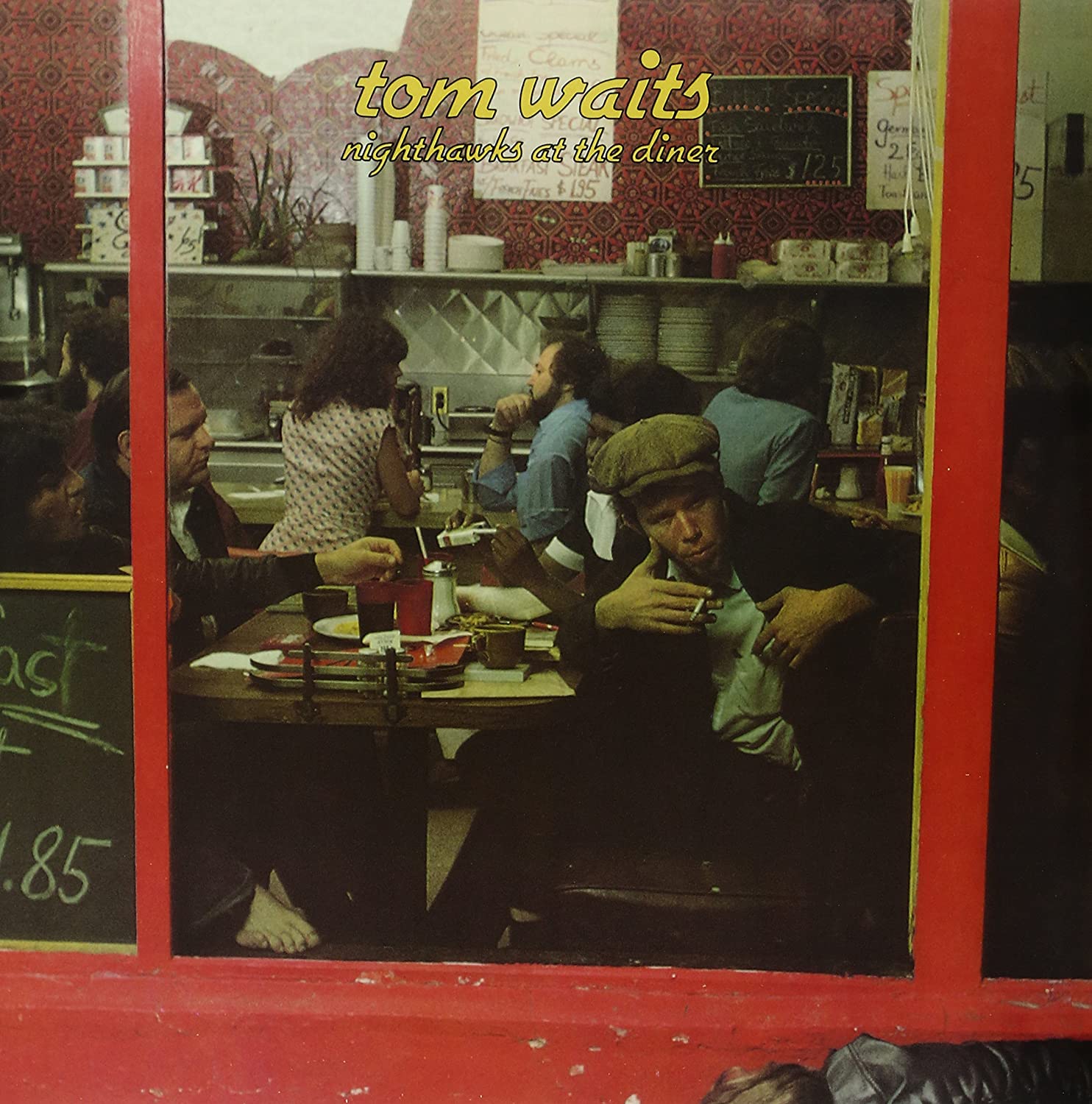
This article will set out to discuss Nighthawks at the Diner, Tom Waits’ first live album, though recorded in a studio (at the Record Plant Los Angeles) in front of a small audience. Dating from 1975 and originally produced by Asylum Records, Nighthawks at the Diner takes its name from Edward Hopper’s famous painting. This record seems to be the best musical translation of all the genius of the Beat Generation, between poetry and the will to romanticise life’s setbacks. This album is the best one to start with Tom Waits, carry on with Tom Waits, and finish with Tom Waits. This record is quite simply one of the most brilliant of the ’70s decade. It captures the atmosphere of a jazz club while adding the blues genius that Tom Waits always transcended. Between Pete Christlieb’s saxophone and Michael Melvoin’s piano, plus bass and drums, Nighthawks at the Diner is a romantic record that expresses part of its essence in the richness of this orchestration. And then Tom Waits splashes the whole album with his incredible voice.

From the intro, dimmed lights and gentle head nods are in order. Tom Waits is about to take the stage. He addresses his audience without further ado, which he will do throughout the recording. Tom Waits’ beat immediately brings to mind Kerouac reciting his texts. “Emotional Weather Report” continues the very jazzy introduction. Quite a few of the following tracks are introduced by a few minutes in which Tom Waits describes each of them. “On A Foggy Night” begins like this: ‘It was upon a foggy night, an abandoned road‘. That is where the track takes place, opposite Nighthawks. “Eggs And Sausage” keeps us inside this mysterious painting, ‘There’s a rendezvous of strangers around the coffee urn tonight‘. In a style similar to the previous one, this track sets out to be just as intriguing as the painting it describes. Tom Waits’ rasping voice is put well forward. Little by little you start to forget the world around you to plunge right into this atmosphere you won’t want to leave.

“Better Off Without A Wife” is even more spleen-filled than the others, a little marvel. And then Jazz comes back in leaps and bounds on “Nighthawk Postcards (From Easy Street)“, almost 10 minutes of watching enviously from across the street, on an evening of ‘dracula moon in a black disguise‘. The saxophone expresses itself fully for the first time, which you find again on “Warm Beer And Cold Women“. You hear a transcended Tom Waits. Then we reach money time with two of the best songs on the whole album. The first is “Putnam County“. The most nostalgic track of all, Tom Waits brings out words like no one else, ‘hunkerin’ down in the dirt to lie about their lives; (…) and the coiffed brunette curls over Maybelline eyes‘. This is true poetry. And then “Spare Parts I (A Nocturnal Emission)” completely changes the atmosphere with a few notes that recall the best spy films. The rhythm gradually races to conclude on an inimitable jazzy ecstasy. A love song was needed at last, so here it is with “Nobody“. “Big Joe And Phantom“ brings tears to our eyes one last time before “Spare Parts II And Closing” wraps things up with applause for the band that accompanied Tom Waits that night.

This album alone sums up a large part of what the ’70s were in the USA. That explains why it is regularly cited in rankings of the best records of all time, in musicians’ best-ofs (Eddie Vedder of Pearl Jam for example), in compilations, films… Tom Waits’ discography has many other masterpieces, but the singularity of Nighthawks at the Diner, from its will to transcribe a painting to its very Blue Note atmosphere, makes it an essential piece. The boundary between so many musical styles is completely erased, just as the boundary between music and poetry seems reduced to nothing. The Tom effect.

Related link:

Link to ALL the anachronique articles

Original version (French)

Tom Waits, ou la beat generation en musique. La rubrique anachronique regorge déjà de grandes légendes qui ont forgé l’histoire de la musique. Ce billet intègre assurément ceux les plus importants. Le grand Tom Waits est un artiste majeur du 20ème siècle qui continue de produire d’excellents albums (le dernier est Bad as Me, 2011). Il compte à ce jour plus de 15 opus et sa musique continue de démontrer que les frontières entre Jazz, Blues, Soul et Rock ‘n’ Roll sont en réalité très infimes. Après tout, quel jazzman est-il plus rock’n’roll que lui ? Probablement aucun.
Cet article s’attachera à évoquer Nighthawks at the Diner, le premier album live de Tom Waits pourtant enregistré en studio (aux Record Plant Los Angeles) devant une audience réduite. Daté de 1975 et initialement produit par Asylum Records, Nighthawks at the Diner tire son nom du célèbre tableau d’Edward Hopper. Cet opus semble être la meilleure traduction musicale de tout le génie de la Beat Generation, entre poésie et volonté de romancer les déboires de la vie. Cet album est le meilleur pour commencer avec Tom Waits, continuer avec Tom Waits, et finir avec Tom Waits. Cet opus est tout simplement l’un des plus géniaux de la décennie ’70. Il capture l’ambiance d’un club de jazz en y ajoutant le génie blues que Tom Waits a toujours transcendé. Entre le saxophone de Pete Christlieb, le piano de Michael Melvoin auquel il fallait rajouter basse et batterie, Nighthawks at the Diner est un opus romantique qui exprime une partie de son essence dans la richesse de cette orchestration. Et puis, Tom Waits vient éclabousser tout l’album de son incroyable voix.
Dès l’introduction, lumière tamisée et petits hochements de tête s’imposent. Tom Waits va entrer en scène. Il s’adresse sans plus tarder à son audience, ce qu’il fera durant tout l’enregistrement. Le beat de Tom Waits fait immédiatement penser à Kerouac qui récite ses textes. “Emotional Weather Report” poursuit l’introduction très jazzy. Un bon nombre des titres qui suivent sont introduits par quelques minutes où Tom Waits décrit chacun d’entre eux. “On A Foggy Night” commence ainsi : ‘It was upon a foggy night, an abandoned road‘. C’est là que le titre prend place, en face de Nighthawks. “Eggs And Sausage” nous maintien dans cette mystérieuse peinture, ‘There’s a rendezvous of strangers around the coffee urn tonight‘. Dans un style similaire au précédent, ce titre se veut tout aussi intrigant que le tableau qu’il décrit. La voix éraillée de Tom Waits est largement mise en avant. On commence petit à petit à oublier le monde qui nous entoure pour nous plonger en plein dans cette ambiance de laquelle on ne voudra pas sortir.
“Better Off Without A Wife” est encore plus spleenétique que les autres, une petite merveille. Et puis, le Jazz revient à grands pas sur “Nighthawk Postcards (From Easy Street)“, quasi 10 minutes à observer envieusement depuis la rue d’en face, un soir de ‘dracula moon in a black disguise‘. Le saxophone s’exprime en plein pour la première fois, ce que l’on retrouve sur “Warm Beer And Cold Women“. On y entend un Tom Waits transcendé. On atteint ensuite le money time avec deux des meilleurs morceaux de tout l’album. Le premier est “Putnam County“. Titre le plus nostalgique de tous, Tom Waits y met en valeur les mots comme personne, ‘hunkerin’ down in the dirt to lie about their lives; (…) and the coiffed brunette curls over Maybelline eyes‘. C’est de la véritable poésie. Et puis, “Spare Parts I (A Nocturnal Emission)” vient complètement changer l’atmosphère sur quelques notes qui rappelle les meilleurs films d’espions. Le rythme s’emballe peu à peu pour conclure sur une extase jazzy inimitable. Il fallait enfin une chanson d’amour, la voilà donc avec “Nobody“. “Big Joe And Phantom“ nous donne une dernière fois la larme aux yeux avant que “Spare Parts II And Closing” ne vienne conclure l’affaire sur les applaudissements pour le groupe qui accompagnait Tom Waits ce soir-là.
Cet album résume à lui tout seul une grande partie de ce qu’auront été les années ’70 aux USA. Cela explique pourquoi on le retrouve régulièrement cité dans les classements des meilleurs opus de tous les temps, dans le best of de musiciens (Eddie Vedder de Pearl Jam par exemple), dans des compilations, des films… La discographie de Tom Waits compte bien d’autres chefs-d’oeuvre, mais la singularité de Nighthawks at the Diner, de sa volonté de retranscrire une peinture jusqu’à l’ambiance très Blue Note, en fait une pièce indispensable. La frontière entre tant de styles musicaux se trouve complètement effacée au même titre que la frontière entre musique et poésie semble réduite à néant. L’effet Tom.
Tom Waits – Putnam Country (1975)
Tom Waits – Spare Parts I (A Nocturnal Emission) (1975)
Lien afférent :

Lien vers TOUS les articles anachroniques