
Anachronique ·

Beck (Raw Folk)

English version · automatic translation

Anachronique: Beck (Raw Folk)

Beck. I have no doubt that every Still in Rock reader knows plenty of songs by Beck Hansen. Since his very famous “Loser”, released in 1994, Beck has reinvented himself many times. This year he released a new album, a rather bad one, as if to tell the whole world: “hey, I’m ‘old’ now, so I make ‘old people’s’ music”.

Except that Beck took part in the revolution of his time. His very first EPs/LPs are real statements. Always folk, in the very first sense of the term, by which I mean Folk as the music of the people, sometimes rap-ish, and always poetic, Beck’s first creations were those of a fragile, semi-bum artist, far from the shiny gloss he now wraps his music in. Golden Feelings (1993) and Mellow Gold (1994, a more classic album generally presented as Beck’s first masterpiece, and an excellent one at that) are records not to be taken lightly. They revealed an inventive, Punk, elusive Beck.

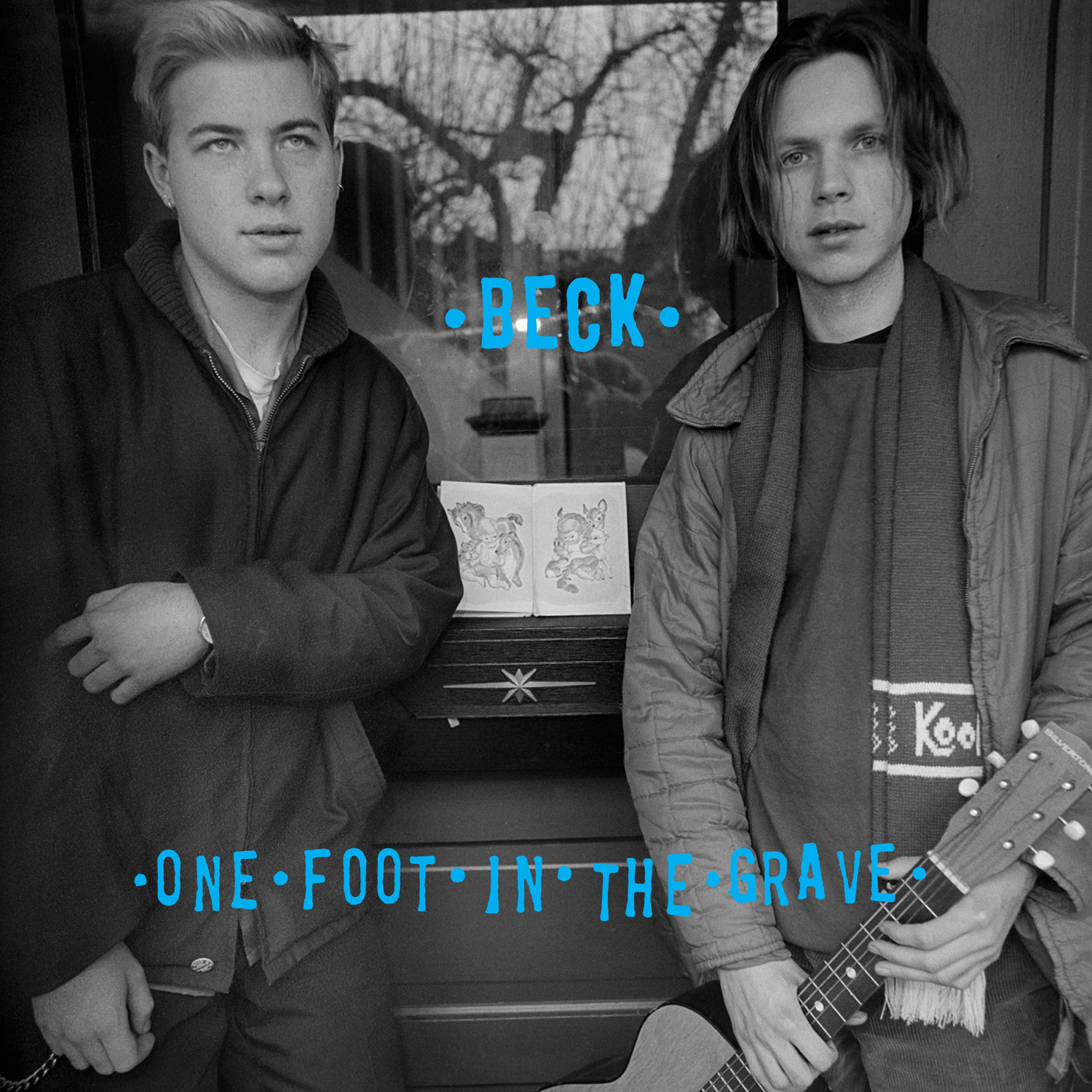
This article sets out to paint a portrait of the lost Beck of One Foot In The Grave (1994), in my view his very best album. It contains acoustic music of rare intensity. While the word raw is probably not enough to describe the state of absolute minimalism of these few tracks, it does capture what makes One Foot In The Grave a record apart. There was never any question of composing this album for a listener. Beck simply delivered what he had in his guts, without worrying about anything else. That is what all music albums should be: declarations of love from each artist to their art, and fuck the rest.

Produced by the legendary Calvin Johnson, his influence can certainly be felt throughout the album. Not only present on several tracks, like “I Get Lonesome“, Calvin left his mark on an album that perfectly conveys the spirit of those small American villages made entirely of wood. Released on K Records (a name Kurt Cobain had tattooed on his arm, Calvin’s label, which also counted The Make-Up), this album is made for hushed atmospheres, for get-togethers and contemplation around a cup of coffee. Correction. This album hushes the atmosphere, it transforms it.

“He’s a Mighty Good Leader“, the first track on this album, immediately throws its folk minimalism in our face, which makes the first listens difficult and, above all, speculative. “Sleeping Bag” lulls us a little more, and the contrast with the album’s only ultra-saturated piece, “Burnt Orange Peel“, loses us for good in the wildest theories about the creative process that led to this record. Further on, there is “Ziplock Bag“, an experimental phase that adds to the stupor of going through this album.

“Cyanide Breath Mint“, the first track that speaks directly to its listener, as will often be the case on One Foot In The Grave, is certainly one of the masterpieces of this album. It takes no more than a minute and thirty seconds, a single guitar and a voice of deep gravity for the melody to be forever etched in our mind. That is putting it mildly, but here, as on many other tracks of this album, Beck manages to brand his songs into us with a hot iron, to inject them intravenously.

“Hollow Log“, in a gentler style, is the tale of an old man slowly dragging his cross through the Texan dust. “Walk ’til you’re restless; Sleep ’til you’re tired; Wake up without thinking; You’re the one I desire“. Or maybe simply a new philosophy of life. It was in any case Beck’s, and that of the ’90s generation which, for the first time, owned its laziness, a real revolution. And as if to recall his constant search for extreme simplicity, “Fourteen Rivers, Fourteen Floods” plunges us right into a fabulous blues where indolence knows no limits.

“Asshole” comes to convince us of all the poetry this album contains. “Your brains went black; When she took back her love; And put it out into the sun; The birds did fly“. A more aggressive track than the others, where “Question marks stretched across her skin”. This track is particularly interesting because it helps to pin down the Beck character of the time, an artist without much confidence, plunged into doubt and mistrust. The same state of mind returns on “Girl Dreams“, when Beck confides: “You’re just the girl of my dreams; But it seems my dreams never come true“, which was also the whole strength of “Loser“. And once again, far from shying away from clichés, this track helps us better grasp what made those years so nostalgic. One Foot In The Grave finally closes on “Atmospheric Conditions” (I will not discuss here the 2009 Expanded Deluxe Edition Bonus Tracks, which contain many additional tracks), which brings back Calvin and a bit of electric guitar.

One Foot In The Grave will forever remain one of the high points of Beck’s career. There he asserted all his songwriting talent. There he earned his stripes, in one fell swoop. There he marked a generation. It is up to us to keep the genius found there alive.

Related links:

Anachronistic article on Bert Jansch (1965)

Link to the list of ALL the anachronistic articles

Original version (French)

Beck. Je ne doute pas que chaque lecteur de Still in Rock connaisse de nombreux titres de Beck Hansen. Depuis son très célèbre “Loser” paru en 1994, Beck s’est de nombreuses fois réinventé. Cette année, il a fait paraître un nouvel album, plutôt mauvais, comme pour dire au monde entier : “eh, je suis ‘vieux’ maintenant, alors, je fais de la musique de ‘vieux'”.
Seulement, Beck a participé à la révolution de son temps. Ses tous premiers EP/LP sont de véritables statements. Toujours folk, au tout premier sens du terme par lequel j’entend Folk comme la musique du peuple, parfois rap-ish, et toujours poétiques, les premières créations de Beck étaient celle d’un artiste fragile, semi-clodo, loin du shinny avec lequel il entoure à présent sa musique. Golden Feelings (1993) et Mellow Gold (1994, un album plus classique généralement présenté comme étant la première masterpiece de Beck, excellent au demeurant) sont des opus qui ne faut pas prendre à la légère. On y découvrait un Beck inventif, Punk, insaisissable.
Cet article a pour ambition de dresser le portrait du Beck perdu de One Foot In The Grave (1994), à mon sens son tout meilleur album. On y trouve une musique acoustique d’une rare intensité. Si le mot brut ne suffit probablement pas à décrire l’état d’absolu minimalisme de ces quelques titres, on y encapsule pourtant ce qui fait de One Foot In The Grave un opus à part. Il n’a jamais été question de composer cet album pour un auditeur. Beck avait simplement délivré ce qu’il avait dans ses tripes, sans se soucier plus avant de tout le reste. Ce que devraient être tous les albums de musique, des déclarations d’amour de chaque artiste à leur art, et fuck le reste.
Produit par le légendaire Calvin Johnson, on y trouve assurément son influence tout au long de l’album. Non seulement présent sur plusieurs titres, à l’image de “I Get Lonesome“, Calvin avait posé sa patte sur un album qui traduira parfaitement le spirit de ces petits villages américains entièrement faits de bois. Paru sur K Records (nom que Kurt Cobain s’était fait tatouer le nom sur le bras, le label de Calvin qui a aussi compté The Make-Up), cet album est fait pour les ambiances feutrées, pour les rencontres et le recueillement autour d’une tasse de café. Correction. Cet album feutre l’ambiance, il transforme l’atmosphère.
“He’s a Mighty Good Leader“, premier titre de cet album, nous jette immédiatement son minimalisme folk à la figure, ce qui fait que les premières écoutes sont difficiles, et, surtout, spéculatives. “Sleeping Bag” nous berce un peu plus encore, et le contraste avec l’unique partition ultra saturée de l’album, “Burnt Orange Peel“, nous perd définitivement dans les plus grandes théories quant au processus créatif ayant conduit à cet opus. Plus loin, on trouvera “Ziplock Bag“, une phase expérimentale qui rajoutera à la stupeur que l’on a à traverser cet album.
“Cyanide Breath Mint“, le premier titre qui parle directement à son auditeur comme ce sera souvent le cas sur One Foot In The Grave, est assurément l’un des chef d’œuvres de cet album. Il n’en faut pas plus qu’une minute et trente secondes, une seule guitare et une voix d’une profonde gravité pour que la mélodie soit à jamais inscrite dans notre esprit. C’est peu de le dire, mais Beck parvient ici, comme sur de nombreux autres titres de cet album, à inscrire ses titres au fer rouge, nous les injecter par intraveineuse.
“Hollow Log“, dans un style plus doux, est le récit d’un vieille homme qui traine lentement sa croix dans la poussière texane. “Walk ’til you’re restless; Sleep ’til you’re tired; Wake up without thinking; You’re the one I desire“. Ou peut être simplement une nouvelle philosophie de vie. C’était en tout cas celle de Beck, et celle de cette génération ’90 qui, pour la première fois, assumait sa paresse, une véritable révolution. Et comme pour rappeler sa recherche constante d’une extrême simplicité, “Fourteen Rivers, Fourteen Floods” nous plonge en plein dans un blues fabuleux où l’indolence n’a plus de limites.
“Asshole” vient nous convaincre de toute la poésie que contient cet album. “Your brains went black; When she took back her love; And put it out into the sun; The birds did fly“. Un titre plus agressif que les autres, là où “Question marks stretched across her skin”. Ce titre est particulièrement intéressant car il participe à cerner le personnage Beck de l’époque, un artiste sans trop de confiance, plongé dans le doute et la défiance. On retrouve ce même état d’esprit sur “Girl Dreams“, lorsque Beck nous confie : “You’re just the girl of my dreams; But it seems my dreams never come true“, ce qui avait aussi fait toute la force de “Loser“. Et une fois encore, loin de ne pas embrasser les clichés, ce titre aide à mieux appréhender ce qui a fait toute la nostalgie de ces années-là. One Foot In The Grave se conclut finalement sur “Atmospheric Conditions” (je ne parlerai pas ici de l’Expanded Deluxe Edition Bonus Tracks de 2009 qui contient de nombreux titres supplémentaires) qui fait réapparaitre Calvin et un peu de guitare électrique.
One Foot In The Grave restera à jamais comme l’un des temps forts de la carrière de Beck. Il y a affirmé tout son talent de songwriting. Il y a gagné tous ses galons, d’un coup d’un seul. Il y a marqué une génération. À nous de savoir perpétuer le génie qui s’y trouve.
Beck – He’s a Mighty Good Leader (1994)
Beck – Cyanide Breath Mint (1994)
Beck – Hollow Log (1994)
Liens afférents :
Article anachronique sur Bert Jansch (1965)
Lien vers la liste de TOUS les articles anachroniques