
Squeeze (Power Pop)
English version · automatic translation
Anachronique: Squeeze (Power Pop)
Squeeze is a band from London formed in 1974. It took until 1978 for it to release its first album, U.K. Squeeze, and its story is an unusual one. Signed to A&M following the release of its EP Packet of Three, Squeeze arrived in the studio with John Cale on production, the famous member of the Velvet Underground. He asked the band to forget all the songs it had written until then and to write new ones. In keeping with its cover, John Cale made the band turn it into a very sexual album to position itself on the English independent market. It was a failure.
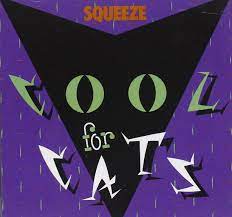
It then took Cool for Cats, a short year later, for Squeeze to be heard of again. It was followed by Argybargy in 1981. The band didn’t stop there and released many albums, EPs, live records and other treats. It remains true, as is often the case, that its first two albums are its best. Here is the review.
Cool for Cats opens with “Slap & Tickle“, a nebulous track that seems to come straight from Saturn. It is intriguing, but Squeeze would not build their career on this kind of song. “Revue” is already more melodic and we rush on to “Touching Me, Touching You“, a punk-looking track that does honour to its time. Here is a first demonstration of what the band was able to produce, an amused and captivating (power) pop music. “It’s Not Cricket” carries on this fine momentum with 2 more burlesque minutes, and then “It’s So Dirty” goes back to 1000% catchy eighties pop. At this point, you would think you were hearing an Elvis Costello song, an impression that will come back often.
But let’s not kid ourselves, almost all the interest of the band’s first album lies in “Up the Junction“. This jangle pop song has everything going for it, romance, an unstoppable rhythm, an eigties-analogue feel to melt nostalgic hearts and a chorus to be listed among the masterpieces of pop. The end of the album contains a few interesting seconds, I am thinking of “Slightly Drunk” and “Cool for Cats“, two songs that would have fitted nicely on the soundtrack of Bill & Ted’s Excellent Adventure. With this album Squeeze prove they are able to deliver invigorating and humorous lyrics, far from the sexual clichés its first producer had wanted to impose on it.
Argybargy is a better album than the first, the one that would make the press say Squeeze was the new Lennon / McCartney. The production is far better done (yet it is still John Wood at the controls, who worked with John Cale, Bert Jansch, Nick Drake, Nico and so on) and the band seems to have accepted the idea that pop music very often requires unstoppable songwriting. “Pulling Mussels (From The Shell)“, the first track, is surely the best example. Although we have moved even closer to Elvis Costello’s world, Squeeze remain no less interesting. This track is terribly well made, ahead of the new wave of its time. You feel the arrangements of the era coming back in leaps and bounds, the piano on the front line, which adds to its vintage side. “Another Nail In My Heart“, the second, is probably more classic, but it does the job. The guitar at the start of the second minute has a lot to do with it.
With “Separate Beds“, Squeeze takes up the great theme of the time: looooove. This time he has to sleep on the sofa, because the mother-in-law is not happy. The verses are inventive and typical of the best the band could do. He watches her through the window, alone in her bed… oh, we’re all softened up now. Then there is a soft middle on this album that slows our enthusiasm a little. You have to wait for “Vicky Verky” for things to get going again, “Wrong Side Of The Moon” for a country-style declaration and “There At The Top” for even more eighties.
Squeeze’s albums are uneven, but sometimes brilliant. That is what emerges from extended listening to the band. Squeeze had in it all the DNA of its era, with its synths, its never-ending melodies and its lyrics about great teenage love. Squeeze has to its credit having managed to escape the clutches of John Cale and the labels that wanted to make it a “band of homosexuals for homosexuals”, or something like that.In terms of influence, note the whole new wave scene, which could not possibly have ignored the Squeeze phenomenon. And jangle pop artists with power pop leanings also owe it a few drinks. In fact, Squeeze could be held up as a symbol of the anti-Blank Generation. Having refused the label with which it was promised success, it decided on its own path, that of an amused pre-New Wave pop. That is how it found success, far from the prefabricated circuits of the producers of the time. And just for that (and for “Up The Junction“, all the same), eternal bravo!
Related links:
Article on Orange Juice
Link to ALL the anachronique articles
Original version (French)

