
Syd Barrett (Psych Pop)
English version · automatic translation
Anachronique: Syd Barrett (Psych Pop)
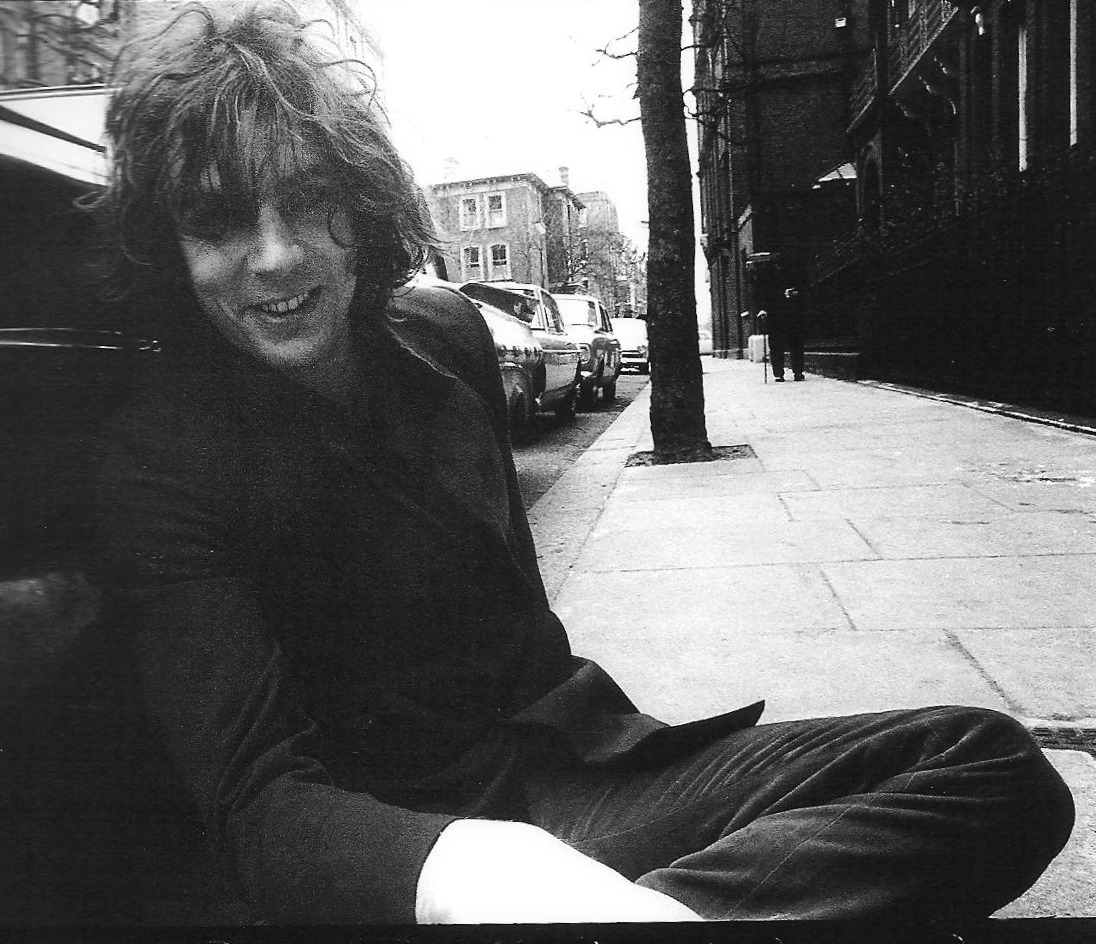
Syd Barrett. Pink Floyd is the band we all know (and frankly not my favourite). Its first album, The Piper at the Gates of Dawn, came out in 1967. At the time, the band was mainly led by Syd Barrett, a musical UFO who left the band after this first effort came out (or rather, was kicked out because his LSD use made him too unstable…). After his Pink Floyd adventure, Syd Barrett released two records: Barrett (1970) and The Madcap Laughs (1970). Most of the songs were written between 1966 and 1967. They remain today among the most innovative pop songs in history.
It will be hard to review every track Syd Barrett produced. All the more so because the experimental nature of the vast majority would lead you to write several lines on each of them. Still, several tracks deserve very particular attention, so dazzling are their melodies, and their impact on pop culture is still felt.
The Piper (1967) finds a second wind from “Take Up Thy Stethoscope and Walk“, the 6th track. This true masterpiece of experimental pop is probably one of those that allowed Pink Floyd to reach the status it has today. The cover of this track by Ty Segall and Mikal Cronin on their album Reverse Shark Attack deserves special mention (article). Next comes “Interstellar Overdrive“, a breathtaking track of almost 10 minutes. I think this is the summit of the best that psychedelic music can produce. The rest is just listening. “The Gnome” reveals the Syd Barrett of his solo records, an acoustic pop track that seems very catchy. “Chapter 24” continues in the same vein. “The Scarecrow” surely influenced the Beatles’ White Album, a psychedelic track that is hard to grasp. Syd’s last creation with Pink Floyd was “Bike“, a pseudo-ironic track closer to what the band would do without Barrett.
The Madcap Laughs (1970) is Syd Barrett’s first solo record. Recording this album was perilous: in May 1968, Syd began working on it, then abandoned the project. In April 1969, Syd went back to work, helped by Malcolm Jones. Helped for a while by a member of The Soft Machine, who then jumped ship, Syd managed to finish his work with the help of Roger Waters and David Gilmour, members of Pink Floyd. The result, logically enough, is a very disjointed album that is hard to get a handle on. “Terrapin“, the opening track, leaves no doubt about the musical deconstruction of the whole album. Even more tellingly, “No Good Tryin” alternates between catchy pop melodies and a rather arduous psych background. “No Man’s Land” surprises with its arrangements and “Here I Go” with its very binary melody. Of course, the track that stands out most on The Madcap Laughs is “Octopus“, one of the best-known songs in Syd Barrett’s entire discography. It is a pop gem that is hard to describe. Syd immediately brings back some confusion with “Golden Hair“, a track that is more UFO than anything else. And then, just to throw us off the scent completely, Syd’s voice reappears double-tracked on “She Took A Long Cold Look“. There is some Johnny Thunders in “Feel“, and all of Barrett’s nonchalance in an “If It’s In You” that made all the musical tailors go pale with rage. The album closes with a Pink Floyd-ish “Late Night” with a full instrumental that had been missing for several minutes. In short, The Madcap Laughs is the strangest record in Syd Barrett’s entire discography. And that is saying something. It is also his best album, the one most like him.
Barrett (1970) opens with “Baby Lemonade“, to my mind one of the greatest pop creations of all time. This track was already the first stroke of genius from Syd, whom many had by then judged unfit to compose music, too hooked on LSD to manage to gather enough energy. Many versions of this track appear on the reissues of Barrett (see the 1994 EMI one), a must have. After a very Ringo Starr “Love Song” and a very Cass McCombs “Dominoes”, you have to wait for “Maisie” (a John Lee Hooker-style track) and “Gigolo Aunt” (a Beatles song?!) to rub shoulders with the best of Syd again. The end of the record is masterfully led by two of the very best tracks, “Wined and Dined” and “Wolfpack“, to this day one of Syd Barrett’s best-known songs. Recorded at Abbey Road Studios with the help of Roger Waters and David Gilmour, Barrett is an essential, if that word still has any meaning. The only live performance of this album, which Syd gave on June 6, 1970, ended after only four tracks, when Syd picked up his guitar and left the stage.
After these albums came out, Syd Barrett withdrew entirely from public life to live on the outskirts of Cambridge. Hence Television Personalities’ “I Know Where Syd Barrett Lives” (article). The books about the still very mysterious Syd Barrett are legion. Syd is surely not the “lost genius of Pink Floyd”, as one of them is titled (an artist of this calibre is never lost to anyone), but Syd certainly remains too little known to the general public compared to his huge influence on today’s scene. The comparison may seem crazy, but I find many similarities between Syd Barrett’s creativity and that of Robert Pollard of Guided by Voices (article): the total absence of compromise, an apparent indifference to structured, rule-abiding songs, many brilliant melodies, intricate and in the end little exploited, left raw, in their wild state. Syd, over to you.
Related link:
Link to ALL the anachronique articles
Original version (French)