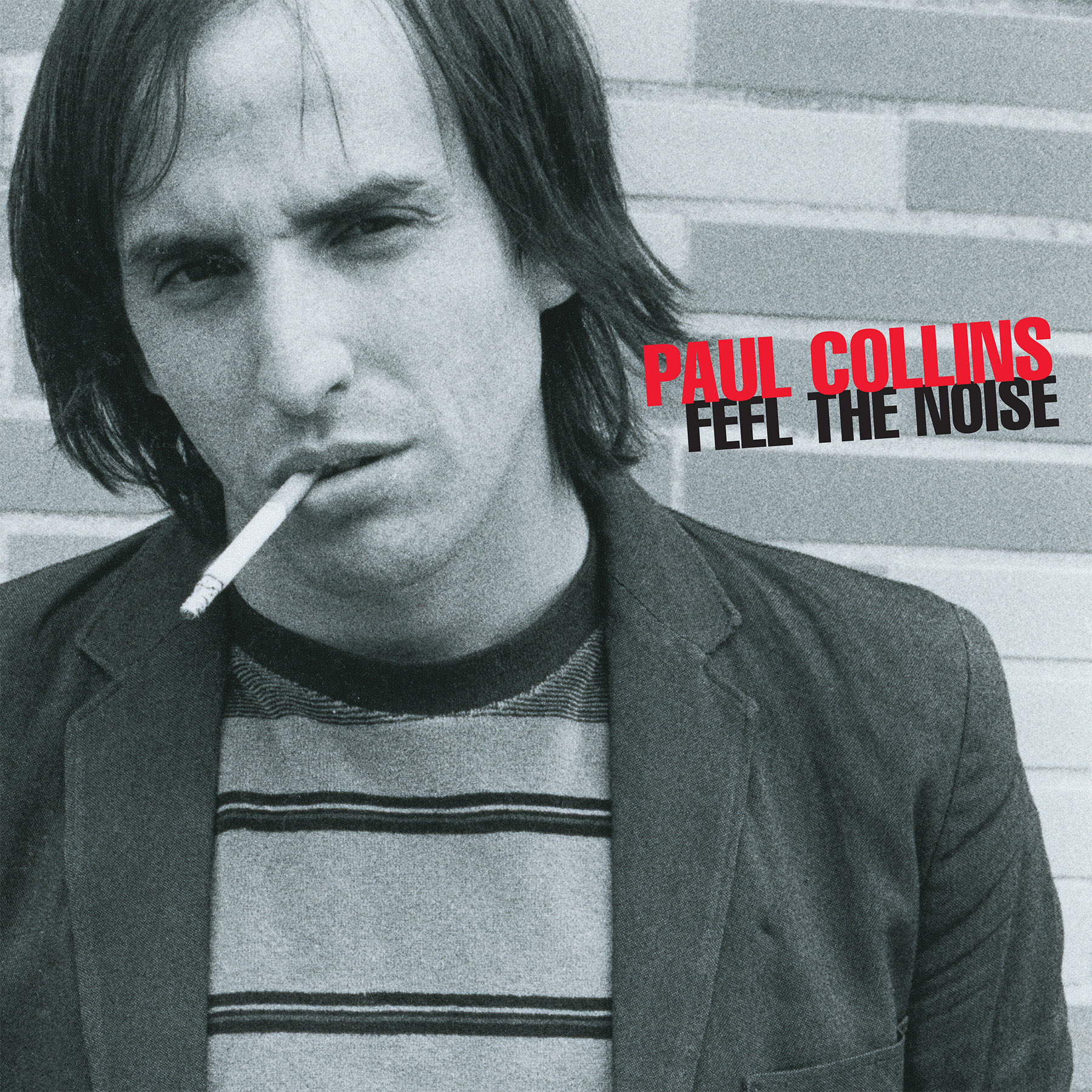
Paul Collins is one of those Power Pop titans it was criminal not to have covered on Still in Rock until now. Paul Collins means first and foremost two cult bands, The Nerves and The Beat. But it also means other projects, many collaborations, a fine solo career (more folk-oriented) and an influence on the scene that still seems to be growing (notably through his project The Beat Army). As he is soon heading to The Smell, this first article of 2015 is the perfect opportunity to paint his portrait.
Headlines. Some music does not change a life, but improves it considerably. The Nerves is the prototype. The self-titled album, released in 1976 on Bomp, opens with “Hanging on the Telephone“, the track that remains to this day the best known in the band’s history. But perhaps the best of the Nerves is found on “When You Find Out“. Let me give you a courtesy warning, this track is a real limpet. “Give Me Some Time” is clearly less Power Pop, but it still holds traces of what would later make Paul Collins a legend. “Working Too Hard“, in a half-Beatles half-Hollies style, gives this record a new boost. These four tracks (mentioned above) were the ones on the band’s first EP, released on The Nerves Record Co. They remain the cream of the Nerves, which would go on to influence many artists, as comes through quite clearly on the Buzzcocks’ album Orgasm Addict. Paul Collins was the drummer, and while Jack Lee handled the songwriting, one can legitimately think that Collins had his say, as The Beat attests.
The Beat (sometimes called The Paul Collins Beat) is Paul Collins’s second major project. This time Jack Lee and Peter Case (who left to form the Plimsouls) are no longer involved. The Beat turns out to be even sharper than the Nerves. The 13 tracks on the self-titled album, released in 1979 on Columbia, are so many hits that give Power Pop a fine image. The album opens with the Beat’s greatest track, “Rock n Roll Girl“. You cannot miss the live version performed on American television in 1980 (link). This track represents all the fun of listening to the Beat. The chorus is sung at the top of your lungs and the guitar sound makes you sweat from the first notes. That is what you call a Hit, a real one. Soon after comes “Different Kind of Girl“, a more controlled track, the real love song of the kind nobody knows how to write anymore. And then the drive of the opener reappears on “Don’t Wait Up for Me“. Perhaps the Beats’ second-best track, this one comes close to the unifying Power Pop of the Milk ‘n’ Cookies, the kind that has been making a real comeback since 2013. To name just two more tracks, you cannot miss “Walking Out on Love” and “You and I“. The first comes close to the Punk of the Ramones, an explosive guitar and a rhythm that seems to have been set by Lucifer. The second almost closes the album on a fine poetic note. Let us dare sentimentality, let us dare the soppy, let us dare! To conclude, I will mention The Kids Are the Same, the band’s second album (though not as good as the first, like the four others), as well as the band’s contribution to the soundtrack of the ever-delightful Caddyshack.
In short, listening to Paul Collins is the kind of listening that, because it conveys the message of fun and love, never gets old. A bit like the Flamin’ Groovies, the Nerves and the Beats were bands that never made it into the collective unconscious, because they were still too close to certain other, far better-known figures. Yet Paul Collins is now one of the founding fathers of Power Pop. And that necessarily comes down to an immense talent for unearthing melodies. Now there is a fine profession. And while I find the rest of his discography a touch below par, it still contains a few tracks that deserve the laurels of these few lines, like “Walking out on Love“. Few artists are capable of maintaining a steady flow across the years and the projects. Paul Collins is one of them. And if the Power Pop flame still seems to drive him, I will not be surprised to see his name one day inscribed in the Underground Rock Hall of Fame.
Related links:
Article on the Flamin’ Groovies
Link to ALL the anachronique articles
Original version (French)
Paul Collins fait partie de ces titans de la Power Pop qu’il était criminel de ne pas avoir évoqué jusqu’alors sur Still in Rock. Paul Collins, c’est en effet et avant tout deux groupes cultes, The Nerves et The Beat. Mais c’est également d’autres projets, de nombreuses collaborations, une belle carrière solo (plus tournée vers la folk) et une influence qui semble être encore grandissante sur la scène (notamment via son projet The Beat Army). Alors qu’il se rendra bientôt à The Smell, ce premier article de l’année 2015 est l’occasion parfaite d’en dresser le portrait.
Headlines. Il y a des musiques qui ne changent pas une vie, mais qui l’améliorent considérablement. The Nerves en est le prototype. L’album self-titled, paru en 1976 via Bomp, s’introduit sur “Hanging on the Telephone“, le morceau qui demeure à ce jour le connu de l’histoire du groupe. Mais peut-être trouve-t-on le meilleur des Nerves avec “When You Find Out“. Autant vous donner le warning de courtoisie, ce titre est un véritable pot de colle. “Give Me Some Time” est clairement moins Power Pop, mais on y trouve malgré tout des traces de ce qui fera plus tard la légende de Paul Collins. “Working Too Hard“, dans un genre mi-Beatles mi-Hollies, donne un nouvel élan à cet opus. Ces quatre titres (précités) étaient ceux présents sur le premier EP du groupe paru via The Nerves Record Co. Ils demeurent la crème des Nerves qui ne sera pas sans influencer de nombreux artistes, ce qui ressort assez clairement sur l’album Orgasm Addict des Buzzcocks. Paul Collins y était batteur, et si Jack Lee se chargeait de la partie songwriting, on peut légitimement penser que Collins avait son mot à dire, en atteste The Beat.
The Nerves – When You Find Out (1976)
The Nerves – Hanging on the Telephone (1976)
The Beat (parfois dit The Paul Collins Beat) est le second projet majeur de Paul Collins. Cette fois-ci, Jack Lee et Peter Case (parti créer les Plimsouls) ne sont plus de la partie. The Beat s’avère être encore plus sharp que les Nerves. Les 13 morceaux qui composent l’album self-titled, paru en 1979 via Columbia, sont autant de hits qui donnent une belle image à la Power Pop. L’album s’ouvre sur le plus grand titre des Beat, “Rock n Roll Girl“. Impossible de manquer la version live performée à la télévision américaine en 1980 (lien). Ce titre représente tout le fun que représente l’écoute des Beat. Le refrain se chante à tu-tête et le son de guitare déclenche des sueurs aux premières résonances. Voilà ce que l’on appelle un Hit, un vrai. On trouve ensuite rapidement “Different Kind of Girl“, un morceau plus maîtrisé, la vraie chanson d’amour comme plus personne ne sait en faire. On puis, on l’entrain de l’introduction réapparaît sur “Don’t Wait Up for Me“. Peut être le deuxième meilleur titre des Beats, celui-ci se rapproche de la Power Pop fédératrice des Milk ‘n’ Cookies, celle qui opère un véritable retour depuis 2013. Pour ne citer que deux titres de plus, impossible de passer à côté de “Walking Out on Love” et “You and I“. Le premier se rapproche du Punk des Ramones, une guitare explosive et un rythme qui semble avoir été imprimé par Lucifer. Le second vient quasiment conclure l’album sur une belle note de poésie. Osons le sentimentalisme, osons l’eau de rose, osons ! Je citerai, pour conclure, The Kids Are the Same, le second album du groupe (bien que moins bon que le premier, à l’image des quatre autres), ainsi la contribution du groupe à la soundtrack du toujours jouissif Caddyshack.
En sommes, l’écoute de Paul Collins est de celles qui, parce qu’elle transmet le message du fun et de l’amour, s’avèrent inlassables. Un peu à l’image des Flamin’ Groovies, les Nerves et les Beats étaient des groupes qui n’auront jamais gagné l’inconscient collectif, car ils étaient encore trop proches de certaines autres figures bien plus connues. Pourtant, Paul Collins fait désormais partie de ces pères fondateurs de la Power Pop. Et cela passe nécessairement par un immense talent de dénicheur de mélodies. En voilà un beau métier. Et puis, si je crois le reste de sa discographie un brin en deçà, on y trouve tout de même quelques morceaux qui méritent les lauriers de ces quelques lignes, à l’image de “Walking out on Love“. On trouve peu d’artistes capables de maintenir un flot constant à travers les années et les projets. Paul Collins fait partie de ces derniers. Et si la flamme Power Pop semble toujours l’animer, je ne serai pas étonné de retrouver un jour son nom inscrit à l’Underground Rock Hall of Fame.
The Beat – Rock n Roll Girl (1979) The Beat – Don’t Wait Up for Me (1979)
Press play in the Bandcamp player. Bandcamp does not move on by itself: use Next.Lancez la lecture dans le lecteur Bandcamp. Bandcamp n’enchaîne pas seul : utilisez Suivant.