
Jackson C. Frank (Folk)
English version · automatic translation
Anachronique: Jackson C. Frank (Folk)
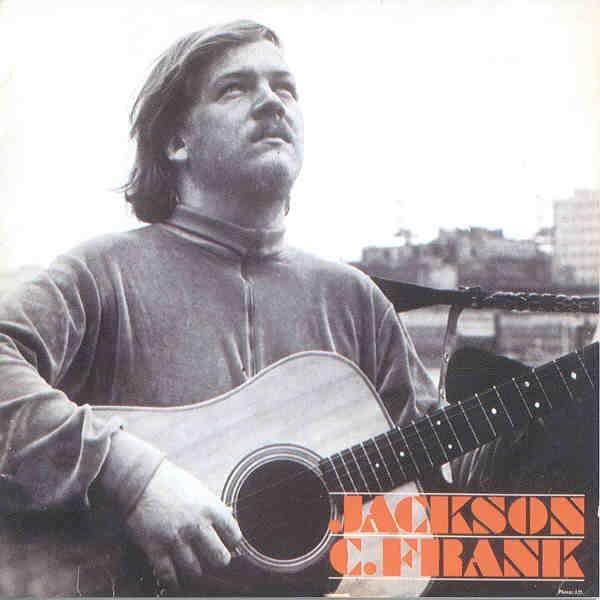
Jackson C. Frank. It was 50 years ago. Jackson C. Frank is a tragic fate. The victim of an accident while at school, he barely survived, his body scarred for life. The vast majority of his classmates lost their lives. Enough to forge a soul. It was with the insurance check he received in his 22nd year that he decided to go into exile in London. There he met Paul Simon, who helped him express all his talent. An album was born of this collaboration. Jackson C. Frank then left the studios to return to a bohemian life. This album, his album, would however be covered by some very big names of the scene, including Bert Jansch and Nick Drake. Paul Simon was the producer, Al Stewart and Art Garfunkel were at the recording,
Often associated with the ’60s Folk explosion, Jackson C. Frank is an emblematic artist of that period, in many respects. His music is stripped to the bare essentials: a guitar, a voice, nothing more. His lyrics are real models of the genre, a kind of poems that bring out all the loneliness of those years.
Self-titled, his one and only album is today the most faithful testimony of Jackson C. Frank’s genius. Apparently a Peel session recorded in 1968 is soon to see the light of day on vinyl. Freakfolk lovers, get ready, there will not be enough for everyone. And until then, we will keep savoring this single studio album.
“Blues Run The Game” is, in its own way, Jackson C. Frank’s The hit. It is also the first track on his album, already a masterpiece. “Yellow Walls” stands out with a bass sound that answers a rather jaunty guitar. “Here Come The Blues” speaks for itself. Jackson C. Frank’s music comes from the great period of the blues, that of early Clapton, of John Lee Hocker, but also, more tellingly, of Lightnin’ Hopkins. Jackson C. Frank’s blues is very gentle; it recalls the great flights that would inspire so many artists. How many notes did Bob Dylan borrow?
Then comes the great sadness of “Milk And Honey“. The track is hard to listen to. You would be tempted to rush to the next one. And yet, opening on a kind of haikai, “gold and silver, is the autumn“, Jackson C. Frank gives us here enough to bury ourselves in long and beautiful thoughts. Also, what did he mean by “My Name Is Carnival”? The falseness of the world around him? I will skip the obviousness of “I Want To Be Alone (Dialogue)” and “You Never Wanted Me” to bounce off a complex track, “Just Like Anything“. A new expression of the artist’s gravity, this track is the one of disenchantment. ‘Death gives no reason, So why should I’.
Let us pause and note, before going through the few remaining tracks, how well Jackson C. Frank’s music avoids all pretension. Yet it is a flaw the artist flirted with throughout the recording of this album. Staking your artistic work on your voice is certainly very brave, but showing off often takes over, at the risk of steering the creative side toward that single feature. And yet Jackson C. Frank, by unanimous agreement, presents an album whose humility serves as a model. Hard to determine what his secret is. Certainly, one can point to very personal lyrics that seem to hide nothing. Jackson C. Frank succeeds where many biographers have failed.
“Marlene” immediately sets itself apart. Here is a potential hit, folk for the people, made to please its listener, to charm them into accepting the magic of a dusty romance. We hear a Jackson C. Frank who is even closer to us. He stands there, he sings for us. Splendid, enchanting. The strokes on the guitar carry us across mountains. Perhaps “The Visit” is the track that most marks his nationality. It is so easy to imagine yourself traveling the road of the great valleys. And then, there had to be a finale that would leave its mark. “Prima Donna Of Swans” plays that role. It is so easy to imagine the dozens of biographies that would bear that name, the documentary, Jackson C. Frank’s nickname, The Swan Boy. Yet none of that happened, but the beauty remains. As a thumb of the nose at the scene, he concludes with “Relations“, one of the most stripped-down tracks on the album. Also one of the most beautiful.
When I listen to this album, I tell myself that he transposed into music what Kerouac wrote this way: “I’m writing this book because we’re all going to die.” Jackson composed his album for precisely that reason. No doubt that is also why he never composed much more.
So why is Jackson C. Frank not more recognized? Surely it is partly due to the near absence of melodies that play on immediacy. In the purest form of the genre, Jackson C. Frank went only for arpeggios, folk in the service of emotion. Impossible not to see how this apparent monotony could have discouraged more than one listener. But let us not give up: Jackson C. Frank will one day be recognized as he deserves, there is no doubt about it. Already, how can one not see that inspiring covers by Nick Drake, an album by Beck and many songs by Simon & Garfunkel can only be the work of a masterpiece.
Related links:
Anachronistic article on Bert Jansch
Link to ALL the anachronistic articles
Original version (French)

Liens afférents :
Article anachronique sur Bert Jansch
Lien vers TOUS les articles anachroniques