The West Coast Pop Art Experimental Band (Experimental Pop)
English version · automatic translation
Anachronique: The West Coast Pop Art Experimental Band (Experimental Pop)
Many of the titans of psychedelic music have already been the subject of an anachronique article. The West Coast Pop Art Experimental Band was missing from the roll call, a blunder I am correcting today. The West Coast Pop Art Experimental Band is a band from Los Angeles that released a total of 5 studio albums. It is also, and above all, the band of a thousand mysteries.Originally made up of three members, The West Coast Pop Art has the reputation of having sold its soul to the devil at a party thrown by Kim Fowley. Bob Markley, an American lawyer in his thirties, described as a rich heir on the lookout for young groupies, is said to have one day told the band members “I want to be in your band. I’ll pay for the instruments and all the gear and all you’ll have to do is let me play tambourine. Or whatever you want.” Legend or truth, the fact remains that Bob Markley managed to worm his way into every aspect of the band, choosing its name, the way the instruments were played, its communication… The fact remains that the band’s ambition was to match Andy Warhol and the Velvet Underground, and while it is hard to say the goal was reached, you still realise that aiming high earned it a certain posterity.
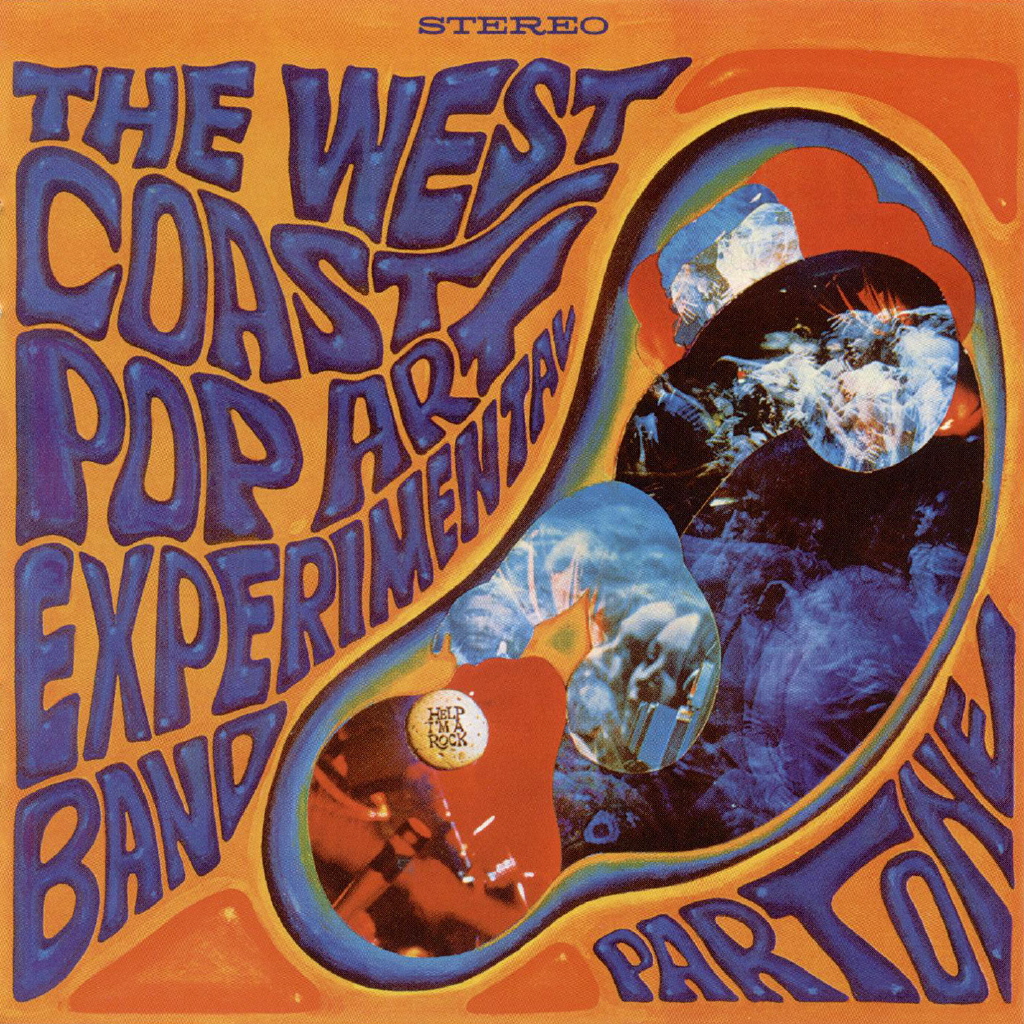
The band released its first album in 1966. This Volume One is a sort of compilation of covers, a few of which are definitely worth a listen. WCPAEB then landed on Reprise Records, a mainly folk label that also had Sinatra and Neil Young in its catalogue. It then released its first real album, Part One. This LP has the reputation of revealing the tension between Bob Markley and the band members, who denounced the pseudo-psychedelic lyrics he had chosen. Above all, it is a piece of experimental music that deserves your full attention.
The first song, “Shifting Sands“, stands out for the clarity of Shaun Harris’ voice. And there is also something of the Doors in this track, a certain poetry that we will find many times on this LP. Next comes “I Won’t Hurt You“, the little miracle of this album, a velvet track that sets all psychedelia/experimentation aside from the equation. While in that respect it is not the most representative song of what this LP contains, it is nonetheless an essential part of your record collection.With “1906” come the first oddities. This track is a sort of symbol of what The West Coast Pop Art Experimental Band was at the time. You hear an enigmatic Bob Markley, a chorus that announces the first signs of spectral pop, and a sixties rhythm faithful to the Kinks. “Help, I’m A Rock“, for its part, is a cover of the brilliant Frank Zappa (whose interview I strongly recommend), a true experimental song, surely the first on this LP. Shock Corridor has never seemed so close.
“Will You Walk With Me” returns to more accessible ground, George Harrison in the making. “Transparent Day” is probably closer to the Byrds and you have to admit that WCPAEB also pulls it off very well. We are right in the sixties. “Here’s Where You Belong” aims to be of the same calibre, the kind of pop song that seemed destined for the still very frail little starry-eyed girl. Yes, but here’s the thing, the two songs are interrupted by “Leiyla“, an unreadable track. A folk guitar punctuates a song that, on its own, justifies the band’s instrumental label. The production is a real tour de force, each instrument finds its place in a complex soundscape.
“If You Want This Love” starts the final trio. The West Coast Pop Art Experimental Band muddies the waters once again with a song that is as sixties as can be. The band plays it sunny, “lipstick kiss” and incessant chorus. Once again, the care given to the production and the softness of Shaun Harris’ voice both remind us far more of springtime gentleness than of the darkness of the more experimental instrumentals. “‘Scuse Me, Miss Rose“, for its part, still breathes Kinks, with all the joy and nostalgia that implies. “High Coin“, finally, closes on a bit of folk, go figure. Note that the track was written by Van Dyke Parks, a collaborator and friend of Brian Wilson…
While The West Coast Pop Art Experimental Band never knew the slightest success in its lifetime, it should be noted that it is now the object of a real cult. You find it on many compilations, including Where the Action Is! Los Angeles Nuggets 1965-1968, Psychedelic Pop Nuggets from the WEA Vaults and the lovely Psychedelic Roses. Perhaps all this is helped by the mystery surrounding its line-up (the back cover of the first album excludes Bob Markley), its lyrics, its jazz, avant-garde, experimental intentions…).
The West Coast Pop Art Experimental Band is ultimately a fine lesson in humility. The band’s name reeks of commercial cliché, Bob Markley’s presence suggested music tailored for the Hit 100, and yet The West Coast Pop Art Experimental Band delivered true experimental music, with everything that implies. Admittedly, Kim Fowley’s involvement hinted at the band’s artistic qualities, but extended listening to this Part One largely confirms it. Bob Markley ended his days in a care home in 2003, far from the limelight he always sought. You tell yourself that The West Coast Pop Art Experimental Band mystery will hang in the air for a long time, how can you accept that a pre-Blank Generation band managed to avoid all the pitfalls of that way of operating?
Related links:
Kim Fowley article
Link to all the anachronique articles
Original version (French)

“Will You Walk With Me” revient sur un terrain plus accessible, du George Harrison en puissance. “Transparent Day” est probablement plus proche des Byrds et force est de constater que WCPAEB s’en sort également fort bien. On est en plein dans les sixties. “Here’s Where You Belong” se veut du même calibre, le genre de titre de pop qui semblait destiné à la petite midinette encore toute frêle. Oui, mais seulement voilà, les deux morceaux sont entrecoupés par “Leiyla“, un titre illisible. Une guitare de folk vient ponctuer un morceau qui, à lui seul, vient justifier l’étiquette instrumentale du groupe. La production est un véritable tour de force, chaque instrument trouve sa place dans un paysage sonore complexe.
“If You Want This Love” entame le trio final. The West Coast Pop Art Experimental Band brouille encore les cartes avec un morceau tout ce qu’il y a de plus sixties. Le groupe se la joue ensoleillé, “lipstick kiss” et refrain incessant. Une fois encore, le soin apporté à la production ainsi que la douceur de la voix de Shaun Harris viennent tous deux nous rappeler bien plus à la douceur printanière qu’à la noirceur des intru’ plus expérimentale. “‘Scuse Me, Miss Rose“, pour sa part, respire encore le titre des Kinks, avec tout ce que cela contient de joie et de nostalgie. “High Coin“, enfin, vient conclure sur un peu de folk, allez comprendre. À noter, le titre a été composé par Van Dyke Parks, un collaborateur et ami de Brian Wilson…

The West Coast Pop Art Experimental Band – I Won’t Hurt You (1967)
Article Kim Fowley
Lien vers tous les articles anachroniques