
Anachronique ·

Q65 (Nederbeat)

English version · automatic translation

Anachronique: Q65 (Nederbeat)

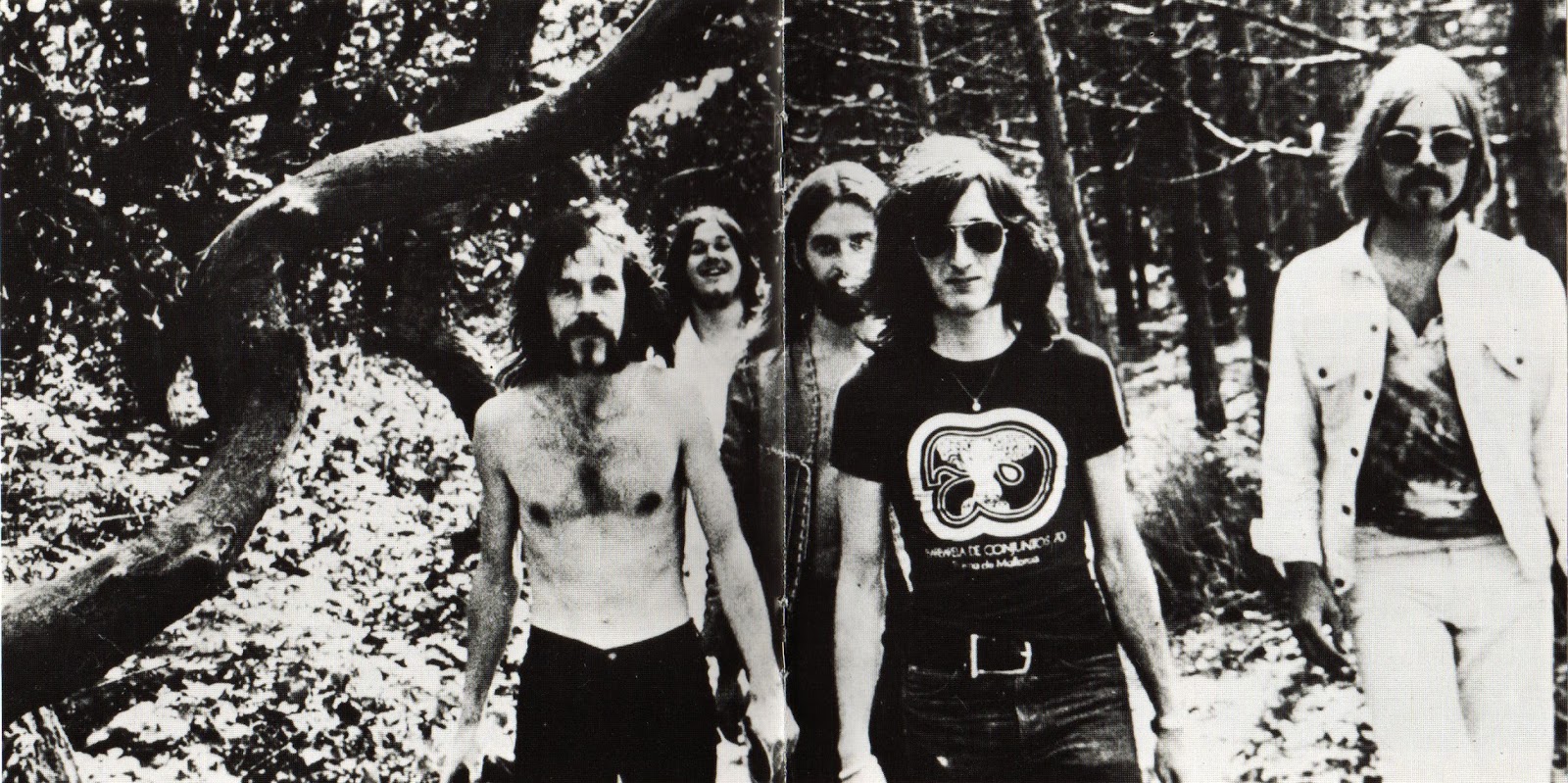
Q65 was a Dutch band formed in 1965, right in the middle of the sixties psychedelic movement. Back then people spoke of Nederbeat, the Dutch movement born in response to the influence of the English scene on rock’n’roll. And then there is also American R&B in it, as well as some Yardbirds. In the end, Q65’s sound brings to mind many figures of the scene, but it is impossible to find one that resembles it too closely overall. What is more, the band remains unknown to most people, a good reason to write an anachronistic article that, I hope, will keep you company for a little while.

Revolution, the band’s first album, released in 1966, is far too inspired by the Pretty Things. For that reason, today we will focus on Revival, the band’s second LP, released in 1969 on Decca (a Universal subsidiary). Its original version, made up of 10 tracks, gives us a nice overview of the pop of the time, which flirted with psychedelic music without ever quite daring to fall into an anti-commercial LP.

“Cry In The Night” is probably the best-known track in the band’s entire discography, a track that reeks of the sixties, with the distortion and everything you need. Next comes “No Place To Go“, a track that has its Californian / just-out-of-prison feel going for it. “It Came To Me” has something very mechanical about it, single-handedly justifying the Rythm and Blues label sometimes stuck on Q65. “I Was Young“, for its part, recalls the Flying Burrito Brothers, like a filter placed on the voice that softens an already clichéd pop.

“World Of Birds” was a must-have at the time, the romantic track that would allow a little slow dance between Janette and Henry. But no quarter with “So High I’ve Been, So Down I Must Fall“: Q65 charges back with its controlled psychedelia. You can feel that Q65 is still hesitating between different musical styles, torn between the trends of the time. “Sundance” settles it. This track is clearly the most psych piece on Revival, already a glimpse of their album Afghanistan, which would come out a year later. And “Voluntary Peacemaker” goes for grandiose, in the manner of those Woodstock bands (Ten Years After…).

Then comes “Ridin’ On A Slow Train“, the best surprise on this album. The recording is incredibly modern, Willem Bieler’s voice is not particularly loaded with studio effects, and part of the instrumentation stands out very clearly to form a magnificent contrast with the reverb-drenched guitar. “Fairy Tales Of Truth” finally wraps things up, the ultimate mark of the band’s mastery as it turns one last time to a space rock-style psychedelic piece.

There are not that many Dutch bands from that era that broke through on the international scene. Q65 knew how to compose “songs”; each of its scores is well thought out and the tracks all seem to have their place in the whole. In the end, there is some Remains in this album, that other British Invasion band that was not even English. And above all there is an excellent track to induct into the pantheon of the psychedelic genre, namely “Ridin’ On A Slow Train“.

Described by Bruce Eder as “one of Europe’s best-kept star-caliber musical secrets for more than 30 years“, one can easily predict that Q65 has bright days ahead, those of a recognition that will come in the end, sooner or later. I invite you to dive into the discography of a band that, beyond its somewhat easy appearances, holds a few tracks you absolutely must not miss. Check out its next album too; the track “Night” is particularly brilliant. These Dutchmen had a way of composing that it would be good to find somewhere other than on Psychedelic Obscurities compilations. A word to any passing DJs…

Related links:

Article on the Remains

Link to ALL the anachronistic articles

Original version (French)
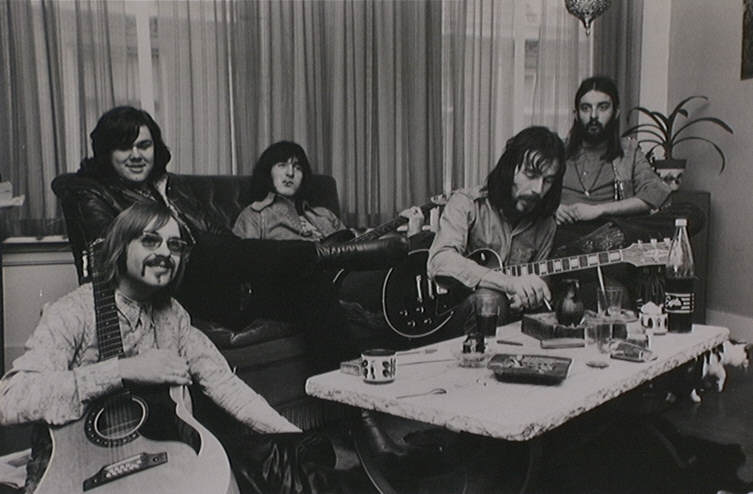
Q65 était un groupe hollandais formé en 1965, en plein dans la mouvance sixties psychédélique. On parle à l’époque de Nederbeat, ce mouvement hollandais né en réponse à l’influence de la scène anglaise sur le rock’n’roll. Et puis, on y trouve également du R&B américain, ainsi que du Yardbirds. Au final, le son de Q65 fait penser à de nombreuses figures de la scène, mais impossible d’en trouver un qui lui ressemble trop dans son ensemble. Qui plus est, le groupe demeure inconnu du plus grand nombre, une bonne raison pour écrire un article anachronique qui, je l’espère, vous accompagnera un petit moment. 
Revolution, le premier album du groupe paru en 1966, est très trop inspiré par les Pretty Things. Pour cette raison, nous nous concentrerons aujourd’hui sur Revival, le second LP du groupe paru en 1969 sur Decca (une filiale d’Universal). Sa version originale, composée de 10 morceaux, nous permet un joli tour d’horizon sur une pop de l’époque qui flirtait avec la musique psychédélique sans jamais trop oser tomber dans un LP anti-commercial.
“Cry In The Night” est probablement le morceau le plus connu de toute la discographie du groupe, un morceau qui sent le sixties à plein nez, avec la disto’ et tout ce qu’il faut. Vient ensuite “No Place To Go“, un titre qui a pour lui son aspect californien / sortie de prison. “It Came To Me” a quelque chose de très mécanique, justifiant à lui seul l’étiquette de Rythm and Blues que l’on trouve parfois collé à Q65. “I Was Young“, pour sa part, rappelle les Flying Burrito Brothers, comme un filtre placé sur la voix qui vient adoucir une pop déjà clichée. 


“World Of Birds” était un indispensable à l’époque, le titre romancé qui allait permettre un petit slow entre Janette et Henry. Mais pas de quartier avec “So High I’ve Been, So Down I Must Fall“, Q65 revient à la charge avec son psychédélisme contrôlé. On sent que les Q65 hésitent encore entre différents styles musicaux, tiraillé entre les tendances de l’époque. “Sundance” vient trancher. Ce morceau est clairement la pièce la plys psychée de Revival, déjà un aperçu de leur album Afghanistan qui paraîtra 1 an plus tard. Et “Voluntary Peacemaker” se la joue grandiose, à la façon de ces groupes de Woodstock (Ten Years After…). 
Vient alors “Ridin’ On A Slow Train“, la meilleure surprise de cet album. L’enregistrement est incroyablement moderne, la voix de Willem Bieler n’est pas spécialement truffé d’effets studios et une partie de l’instru’ ressort très clairement pour former un magnifique contraste avec la guitare pleine de réverb’. “Fairy Tales Of Truth” conclut finalement l’affaire, ultime marque de la maitrise du groupe qui se tourne une dernière fois vers une pièce psychédélique façon space rock. 
Ils ne sont pas si nombreux les groupes hollandais de cette époque à avoir percé sur la scène internationale. Q65 savait comment composer des “titres”, chacune de ses partitions sont bien pensées et les titres semblent tous avoir leur place dans cet ensemble. Au final, il y a du Remains dans cet album, cet autre groupe de la British Invasion qui n’était pourtant pas anglais. Et, il y a surtout un excellent morceau à faire entrer au panthéon du genre psychédélique, j’ai nommé “Ridin’ On A Slow Train“.
Décrit par Bruce Eder comme étant “one of Europe’s best-kept star-caliber musical secrets for more than 30 years“, on peut facilement prédire que Q65 ait de beux jours devant lui, ceux qu’une reconnaissance qui finira par arriver, tôt ou tard. Je vous invite à vous plonger dans la discographie d’un groupe qui, outre ces apparences un peu faciles, recèle de quelques morceaux à ne surtout pas manquer. Reportez-vous également à son album suivant, le titre “Night” y est particulièrement génial. Ces dutch avaient pour eux une façon de composer qu’il serait bon de retrouver ailleurs que sur des compilations de Psychedelic Obscurities. Avis aux DJs de passage…

Q65 – Ridin’ On A Slow Train (1969)
Q65 – It Came To Me (1969)

Liens afférents :
Article sur les Remains
Lien vers TOUS les articles anachroniques