James Taylor (Folk)
English version · automatic translation
Anachronique: James Taylor (Folk)
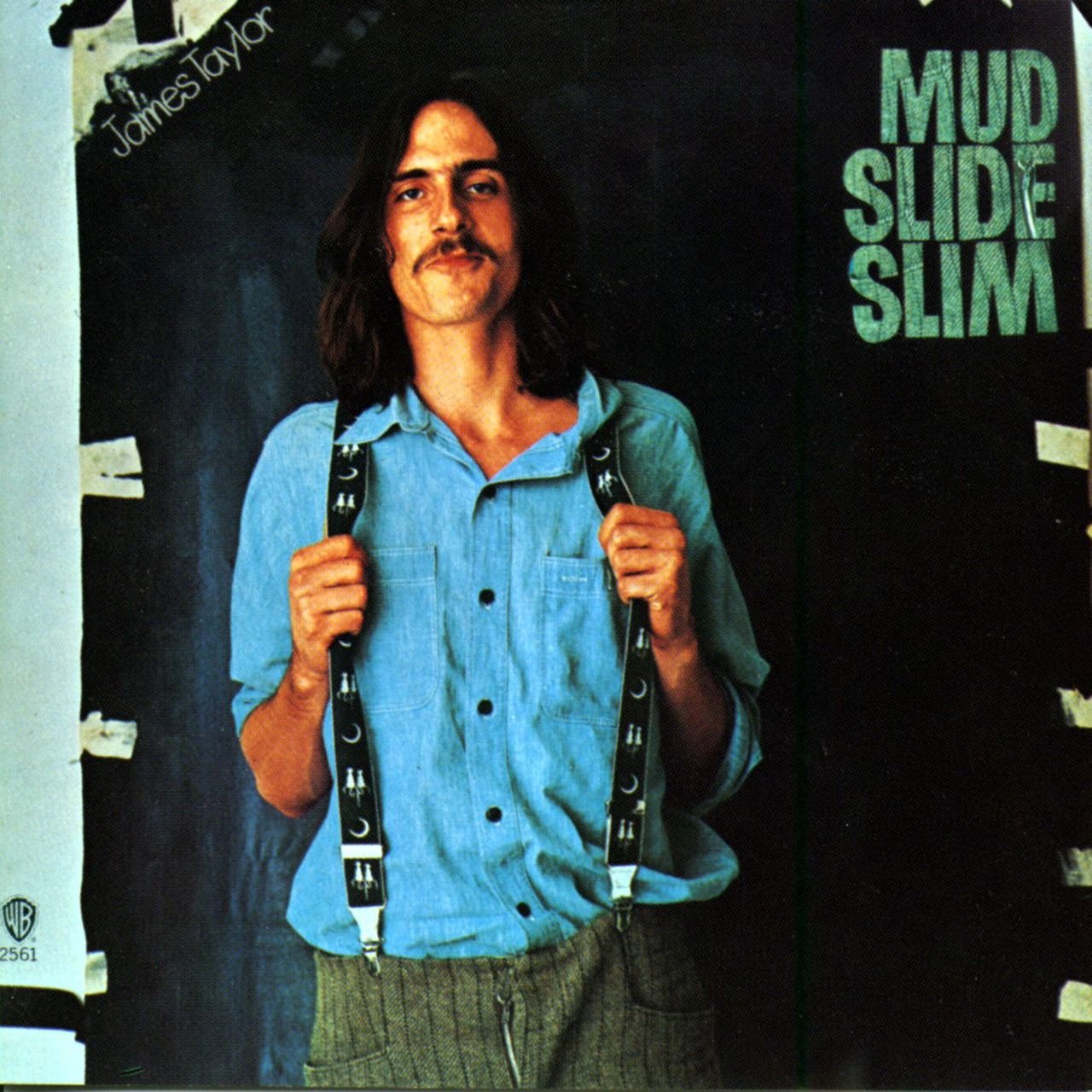
James Taylor. How could you review any album other than the one that begins with “Don’t come to me with your sorrows anymore”? Of course, writing about a single James Taylor LP means making an agonizing choice. There is his fabulous first album, James Taylor (1968), Sweet Baby James (1970) and JT (1977)… Today I choose to present Mud Slide Slim And The Blue Horizon (1971) because, in my view better than the others, it is one of those mythical albums that, between folk and country, dwell on the American dolce vita all the more.
On Mud Slide Slim And The Blue Horizon, James Taylor presents himself to us facing the rest of the world. You find many times over his aspirations to solitude and letting go. Yet James Taylor casts a tender eye on the world around him, preaching friendship (far more than love), constantly preaching the beauty of the landscape. This album is as contemplative as it is serene.
A bit like Nick Drake did so well, James Taylor is one of those novelists of life who depict a serene America where people stand together. His music, perfectly orchestrated, forms the stanzas of idleness. James Taylor is an artist you listen to when you are in love, to match your state of mind, and that you also listen to when everything falls apart, to remedy the apocalypse. This article thus completes our series on American folk, the one and only. Van Morrison, J.J. Cale, Randy Newman, The Flying Burrito Brothers, Nick Drake and James Taylor were among the main members of the club of the greatest songwriters in history; here is the story of one of them.
“Love Has Brought Me Around” is rather misleading in that it suggests James Taylor is driven by a desire to follow his romantic destiny. The song is a fairly accurate preview of what part of the album contains, but you should not rely on it too much. “You’ve Got A Friend“, on the other hand, is probably the song that best symbolizes how James Taylor’s music is a friendly pat on the shoulder. This track, which is without a doubt one of the most beautiful anthems to friendship ever written, clearly leans toward the most folk side of James Taylor’s creations, or rather I should speak of Bedroom Folk.
“Places In My Past” dwells on the past of an endless traveler. James Taylor’s slightly nasal voice colors this track with a nostalgic melancholy that does us good. “Riding On A Railroad“, for its part, recalls Leonard Cohen, for the very fifties instrumental, and Bob Dylan for its relationship to wide open spaces. This song is not the most emblematic of James Taylor’s discography, but what a journey, what a cruise! You glimpse the little shop in the distance, like a prop at the end of the long dusty road you have just traveled. It is “Soldiers” that welcomes us there, “just after sunrise”. The day was long and now the first part of the album is already coming to an end. And then James Taylor “got out of bed, say “good morning, what a beautiful day”…
The crossing resumes with renewed vigor with “Mud Slide Slim“. This song is a new excursion into ’70s folk, closer to Van Morrison than ever. “Mud Slide Slim” is a luxurious wandering through the world of a man of the land, where James Taylor wants to “pick up a piece of land and built myself a cabin back in the woods”. And then, the match between message and artistic form is absolutely perfect: the minimalism on each side is reinforced by a romantic veil, the lyrics refer to the horizon and the music is garnished with a Texan piano-bar. Here indeed is a masterpiece of the genre, nothing less.
“Hey Mister, That’s Me Up On The Jukebox” is directly labeled as a “sad song”. James Taylor indeed delivers a ballad over which you reflect on the road already traveled, with its goodbyes and its bows. “You Can Close Your Eyes” is more comforting. The third wonder of the album (with “You’ve Got A Friend” and “Mud Slide Slim“, as you will have gathered), James Taylor says he no longer knows any love songs and can no longer sing the blues. He delivers a song of extraordinary sensitivity, so that his sweetheart can hum it while he is away.
The last part of the album opens with “Machine Gun Kelly“, a more upbeat track that recalls the inspired J.J. Cale (though he always was) of his best albums. Without getting into the political message, you get lost in the few Country touches that still lull you with their warmth. And then “Long Ago (And Far Away)” should also be remembered as one of the greats of James Taylor’s discography. Graceful and suave, it brings back several female voices, as if to recall the leitmotif of this album.
We move on to something else with “Let Me Ride“, an almost funk-ish song with its brass and frantic rhythm. Van Morrison seems to be striding back, once again. Backing vocals reinforce the impression and now “Highway Song” creates the unexpected: a Randy Newman-style song. This is indeed the style in which James Taylor is at his best, when his melancholy takes over from good intentions. James Taylor says he wants to hit the road again, leave behind the people he met along the way, to find himself alone, once again. Ah, did you say Beat Generation?! And then this “higway” leads us straight to “Isn’t It Nice To Be Home Again“. Everything is said in the name of this track. James Taylor completes his concept album. What a beautiful odyssey it was!
This album is flawless, which is why it left its mark on the history of American folk and, more generally, of American music with a capital A. Unlike some anachronique articles on forgotten albums, Mud Slide Slim And The Blue Horizon is an absolute essential – recognized as such – for anyone even slightly interested in seventies music.
James Taylor means lyrics, fabulous songwriting and also a voice. The experience is absolutely perfect. With this kind of album, you find yourself dreaming of what your life would have been in another reality, lost in a little cabin on one of Michigan’s lakes. And in the end, James Taylor gives us a taste of that other existence – delicately flavored with whisky -, and that is already a lot.
Related links:
Article on J.J. Cale
Article on Van Morrison
Original version (French)