
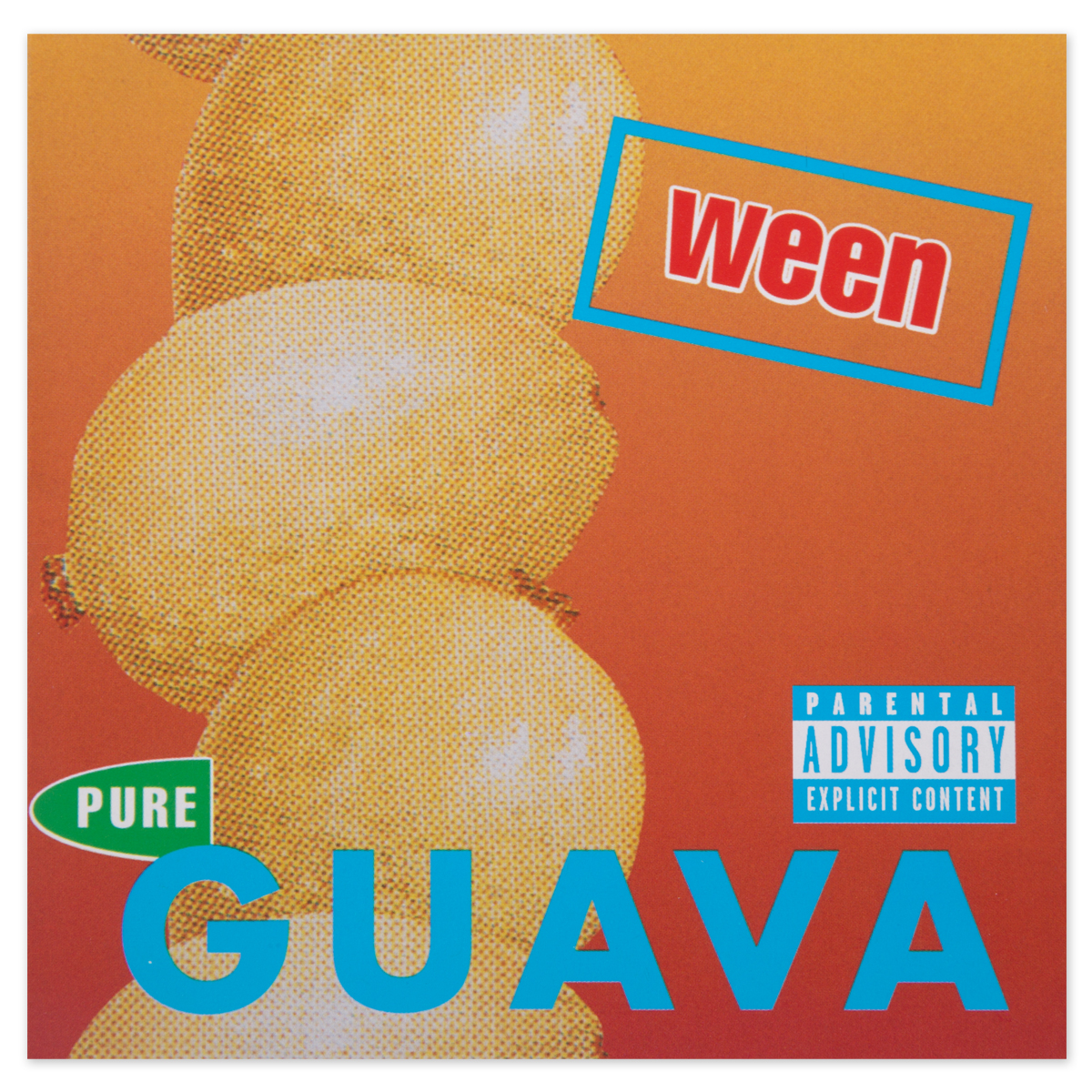
Ween – Pure Guava (Weird Pop)
English version · automatic translation
Anachronique: Ween – Pure Guava (Weird Pop)
For a while now I have wanted to
write this anachronique article on Ween. It must be said that the band is
one of the most creative pop outfits the sweet American soil has ever borne.
Its status as a near-unknown on French soil (let us admit it) made it the
ideal candidate for one of Still in Rock’s Monday articles, but I still had to find the inspiration to write about a band capable of giving you too much.
By chance, it so happens that I have been led to
talk a lot about Ween lately, and that fascination has
always won out over astonishment. So here I am. Ween is a band formed in New Hope (Pennsylvania) in 1984 by two childhood buddies, Mickey Melchiondo and Aaron Freeman. The band’s first tape, The Crucial Squeegie Lip, arrived in 1987. Back then it was doing alternative pop with a psych leaning. Its first album, GodWeenSatan: The Oneness, came out in 1991, against a backdrop of the abstract and indie rock of the time. Pure Guava, the subject of our article, arrived in 1992 on Elektra Records.
Let us say it right away, the band’s discography is just as weird as this album. Ween got noticed with 12 Golden Country Greats (1996), a proper country music album. It also released The Mollusk, on the theme of shellfish and crustaceans. Note too that it wrote for X-Files, South Park and SpongeBob, to name just those three series. In short, with Ween, Yes They Can.
So anything is possible with Ween. Start two plays of the album a few seconds apart, the experience will not change much. Listen to the vinyl after scratching it with car keys, plug your headphones in only halfway, play it on a boombox in a laundromat, convert your mp3 to 40kbps. I am having fun with this, but that is one of the keys to the band: being WEIRD. Ween is an incomprehensible project made by guys who seem to have kept the drugs from 2050.Ween is also a huge source of inspiration for Mac DeMarco, as listening to Pure Guava will convince you. And Ween is a band capable of playing alternative rock, hip-hop and experimental stretches in the same track, sometimes in under a minute. So with Ween, you cannot expect to love every track before you have known them for a few months, but how good it feels to hang out with them, beer in hand, once you have got better acquainted. And that does not involve any sexual relations.
“Little Birdy” is the first track on this album. The electronicised, out-of-tune jangle pop sound does the trick perfectly, Ween eases us gently into its world. “Tender Situation” is already rougher. Super minimal, it seems to take Yo La Tengo’s whispering ambition and turn it into something very unwholesome. The second half of the track is analogue and electronic, a sort of Raymond Scott meeting The Space Lady.
“Stallion (Pt. 3)” introduces the album’s first hip-hop rhythms. This time Ween claims to control the sun, so we head off on a Sun Ra-style trip, but 1992-style. “Stallion (Pt. 3)” is without question one of the best tracks on this LP. To tell the truth, the first three are unquestionably among them. We carry on with “Big Jilm“, a pre-Carrot Rope track (link) that boils down to a single loop Ween plays non-stop. And then the first side of this album closes with “Push Th’ Little Daisies“. The biggest hit in the band’s history, it is nonetheless a semi-experimental piece for One Flew Over the Cuckoo’s Nest.
We tackle side B with “The Goin’ Gets Tough From The Getgo“. Ween catches us off guard with an even more disruptive track, no structure, no melody, not many frills apart from an incredible LL Cool J-style sense of groove. I then welcome you to an early-’90s rave party with “Reggaejunkiejew“. It ends badly, the girls run off, you see them running away in their miniskirts and Ween stays there putting on the show.
“I Play It Off Legit” is the song you should send to every guy who thinks he is the best. “Yeah, you’re so legit”, really, you rock dude. Ween goes for triple irony on a track where it keeps repeating how together the guy is. I will no longer point out that the track is another success, this album is made of nothing else.
“Pumpin’ 4 The Man” goes super fast, Ween has gone off into a dimension where a country singer has inhaled too much helium. Problem: the instrumental seems to have taken a hit too. Second problem: it works super well, this album no longer means anything, it is brilliant.
I do not know which of you has not yet seen Twin Peaks (oh man), but you are probably familiar with one of the most awkward moments in TV history – also one of the most bewitching – I am of course talking about James’s song: link. Whatever the case, Ween delivers here the most perfect sequel, a year after David Lynch’s masterpiece. The track is called “Sarah” and the resemblance is all the more striking, nothing here is down to chance.
“Springtheme” is the album’s spleen moment, a fine introduction to the C side of this album. And then, after a bit of tenderness, comes “Flies On My Dick“, a track that could have been a masterpiece of modern pop, in another reality. Ween goes after a fly that keeps coming back to land on his dick, unless there are several of them. The super hip hop instrumental coupled with the double-tracked vocals makes this track an instant highlight of the album, rare enough to be noted. Oh yes, there is guitar, too.
Come on, just for fun, here it is, I can tell you want to play it next Saturday.
“I Saw Gener Cryin’ In His Sleep” plays the little nursery rhyme. “Touch My Tooter” plays the big nursery rhyme. Ween wants her to touch his tooter over a backdrop of noisy pop.
The album’s last side opens with “Mourning Glory“. Ween carries on from “Touch My Tooter” in a post-apocalyptic spirit that seems to have nothing to do here. “Loving U Thru It All” follows in a Dinosaur Jr. / nineties alternative rock spirit. “Hey Fat Boy (Asshole)” is about murder, after battling a fly, Ween goes after fat people.
“Don’t Get 2 Close (2 My Fantasy)” is the album’s last pop moment. Lost among experimental tracks, it is nonetheless a superb piece of pop. How many times did Mac DeMarco listen to it? How many times did Freddie Mercury turn in his grave? “Poop Ship Destroyer” is a conclusion that comes at just the right time.
With Pure Guava, Ween pulls off its bet perfectly: showing that borders do not exist, that labels are pointless and that everything is ultimately one big joke, which does not stop it from being elevated from time to time. Or rather, Ween manages to show that it, at least, can do all that.
Pure Guava was designed for its austerity, a real will to rough up the listener. Pop albums like this are no longer made. Most pop albums of 2016 do not try hard enough, and while pop music aims to be accessible (because it is popular, right), that does not stop you slipping in a few experiments. In reality, Pure Guava is the statement of a band that seems to have set itself the ultimate goal of not joining the system, being rejected by the press and saying fuck to the general public. In that sense, Ween is a pure product of its time, an ironic-ironic album that conveys the nineties spirit we miss so much. Pure Guava should be taught in every pop school in the world. Be weird, pleeease.
Related links:
Article on Beck
Link to ALL the anachronique articles
Original version (French)

écrire cet article anachronique sur Ween. Il faut dire que le groupe est
l’une des formations pop les plus créatives que la douce terre américaine ait portée.
Son statut de quasi-inconnu sur le sol français (avouons-le) faisait donc de lui le candidat
idéal pour un des articles du lundi de Still in Rock, mais encore fallait-il trouver l’inspiration pour écrire sur un groupe capable de trop vous en donner.
beaucoup parler de Ween ces derniers temps et que la fascination l’a
toujours emporté sur l’étonnement. M’y voilà, donc. Ween est un groupe formé à New Hope (Pennsylvanie) en 1984 par deux potes d’enfance, Mickey Melchiondo et Aaron Freeman. La première K7 du groupe, The Crucial Squeegie Lip, arrive en 1987. Il fait alors dans une pop alternative à tendance psychée. Son premier album, GodWeenSatan: The Oneness, paraît en 1991, sur fond de rock abstrait et indie de l’époque. Pure Guava, qui fait l’objet de notre article, arrive en 1992 via Elektra Records.