
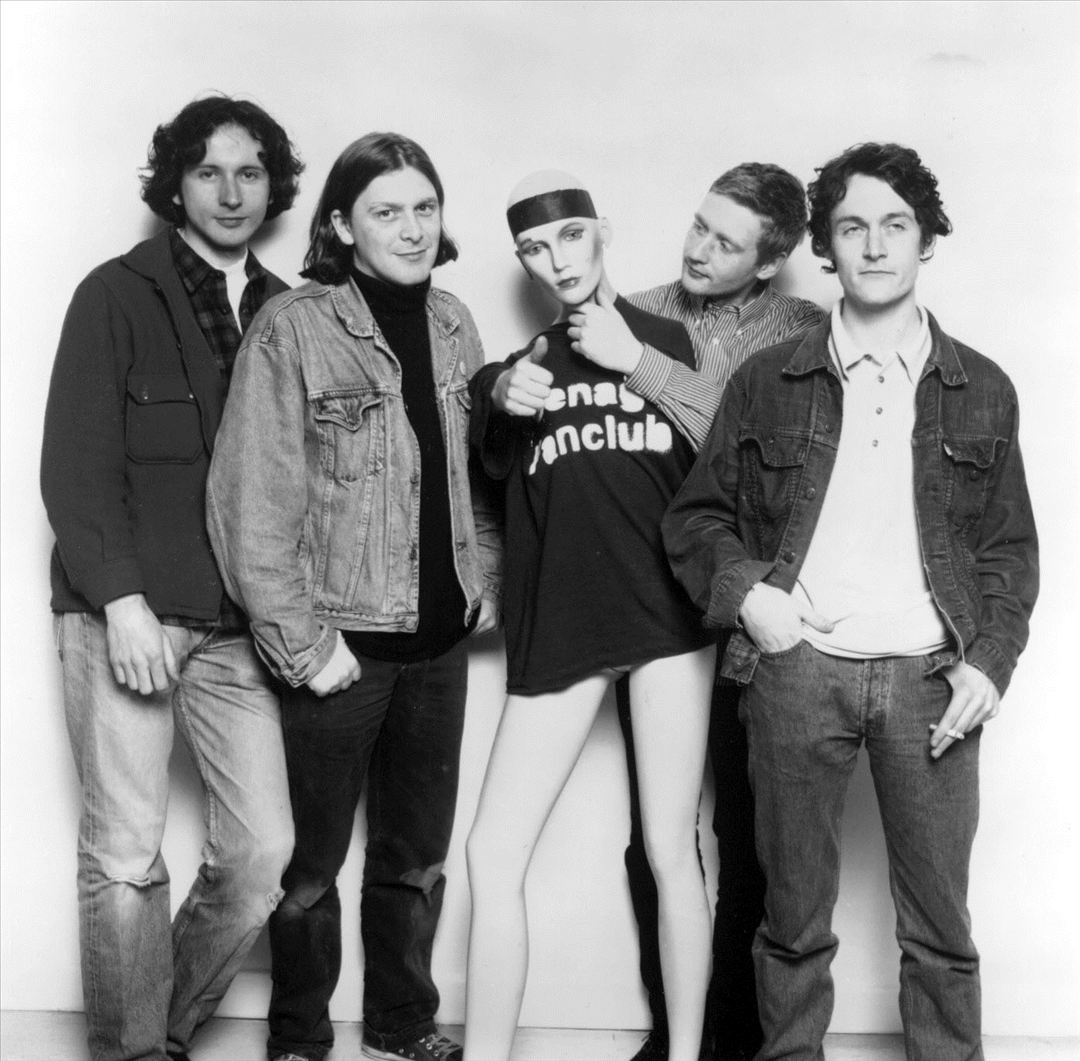
Teenage Fanclub (Indie Rock)
English version · automatic translation
Anachronique: Teenage Fanclub (Indie Rock)
As you know, Still in Rock’s Mondays are devoted to anachronique articles, a way of revisiting the past and making sense of a music scene that floods us with ever more novelty, even if it means losing our bearings. Today’s article is one of those few anachroniques I have been keeping under my arm for many years, because I know they are essential to the coherence of this section – it is, incidentally, the 144th of its kind…
Teenage Fanclub’s discography is immense, and yet I hesitated for a long time before choosing which album to feature on Still in Rock. My choice finally fell on Grand Prix, an LP released in 1995, some time after the period many consider the band’s most flourishing (the very early 90′s). In fact, while there are many reasons to feel nostalgic listening to Teenage Fanclub’s music, this album is, I think, the one that most makes us long for the impossible time machine, straight back to the Jacques Chirac era (oh, come on!).
I won’t retrace the band’s whole biography, very good books have been written on the subject. Just know that Teenage Fanclub formed in 1989 and are still active. Know also that Bandwagonesque (1991) is its best-known album and that it was many times cited as the best album of that year. That probably explains why Teenage Fanclub worked so hard on their melodies on each of the following albums, awaited with knives out and conscientious. These good pupils of the rock scene didn’t have the vengeful and experimental spirit of Sonic Youth, but they knew how to do Beach Boys 90s-style.”About You“, the first song, is perhaps the most sixties of all, a jangle pop guitar and the turbo on the vocal part. “Sparky’s Dream” seems to want to be bluesier, but Norman Blake’s voice quickly reminds us that Teenage Fanclub’s intention is POP. “Mellow Doubt”, for its part, starts like a far too unoriginal lover’s track. It redeems itself a little in the second half, which turns towards folk, but I don’t think it necessary to dwell on it any longer.
“Don’t Look Back” has everything of a teenager’s song, which is rather fitting since that’s the band’s name. Norman Blake tells how he steals a car to drive his sweetheart back to the porch of her house. The track, with its choruses and drawn-out refrains, is a model of the high school song to slot into every film in the vein of Reality Bites. Bring out the violins:
“If I could find the words to say
The sun shines in your eyes
So brighten up my city sky”
“Verisimilitude” is a more dark-ish song, Silver Jews-style. “Neil Jung“, a blend of Karl Jung and Neil Young, could not escape the slightly retrospective love song. The instrumentation is slow, just right, this track is one of the big hits in Teenage Fanclub’s discography, and for that matter, Norman pushes his voice over this slightly jangle pop instrumentation that worked wonders at the time. The structure of the song is quite ingenious, Teenage Fanclub masters its melodies to perfection.
A track from Songs From Northern Britain (1997)
“Tears“, the first track on side B, unmistakably brings to mind Built to Spill, “Car“ era. And here is the cheesiest thing in Teenage Fanclub’s music. Get out your scooters and go for a ride along California’s long cycle paths, don’t forget your roller skates, your fluorescent pink elbow pads and your little shorts, you must be sweating with happiness enough to infuriate the old granny watching you go by from the top of her building.
“Discolite” reveals another talent of the Teenage Fanclub guys, who also knew how to borrow from Beatles-style melodies. The British bands of the time were the best of the genre, and although Teenage Fanclub are actually Scottish, we’ll pretend. “Say No“, by adding a bit of folk that almost leans towards country, finds a new trick. Teenage Fanclub certainly knows how to make us abandon our usual bearings in favour of seemingly easy music.
“Going Places“, with its Yo La Tengo airs, doesn’t hold back from driving the point home in a kind of pop that takes 10% from power pop so as to avoid the britpop pitfall. It’s all very well done, you no longer really know whether you’re on the soundtrack of She’s All That or Before Sunrise, the fact is you would like to be as sugary as the band. “I’ll Make It Clear” wants to give us an answer, but all it ever does is reaffirm Teenage Fanclub’s passion for a world in which anger wouldn’t exist. “I Gotta Know”, with a decidedly power pop sound, sets out to knock us over with a chorus hammered home. “Hardcore/Ballad“, finally, is all this album needed as a conclusion: noise, as if to show that the infatuated mood of this LP is a choice of circumstance rather than an obsession. And Teenage Fanclub closes on a nursery rhyme you sing around the campfire.
At the crossroads between power pop, Big Star, The Jesus and Mary Chain and the British scene of the 90′s, Teenage Fanclub is one of those cult bands that knew how to use several of the musical styles of its time while always keeping a filter very much rooted in its era. Grand Prix is indeed post-nineties ahead of its time. The album borrows ALL the codes of nineties music, as if to deliver a last essay in the genre. And to be complete, also go and check out Bandwagonesque – “The Concept” – where you find the same very 90s indie rock drive the greatest had, Pavement included.
Tracklist:
“About You
“Sparky’s Dream
“Mellow Doubt
“Don’t Look Back
“Verisimilitude
“Neil Jung
“Tears
“Discolite
“Say No
“Going Places
“I’ll Make It Clear
“I Gotta Know
“Hardcore/Ballad
Links:
Article on Weezer
Link to ALL the anachronique articles
Original version (French)
div>