
The Cramps (Psychobilly)
English version · automatic translation
Anachronique: The Cramps (Psychobilly)
The Cramps is above all an encounter, that of Lux Interior and Poison Ivy, the day he picked her up hitchhiking. Bryan Gregory, Lux Interior’s co-worker at a record store, soon joined them. And then Lux’s sister, Pamela, who could not even play the drums, quickly swelled the ranks. She soon left (again) and was replaced many times. The Cramps’ beginnings were chaotic: live shows where the guitars were out of tune (at CBGB), tumultuous departures… And then the Ramones backed them, which led to the release of an album in 1980, Songs the Lord Taught Us, produced by none other than the immense, the brilliant, the fabulous Alex Chilton. That is when Kid Congo Powers, the former guitarist of the Gun Club, joined the band in turn.
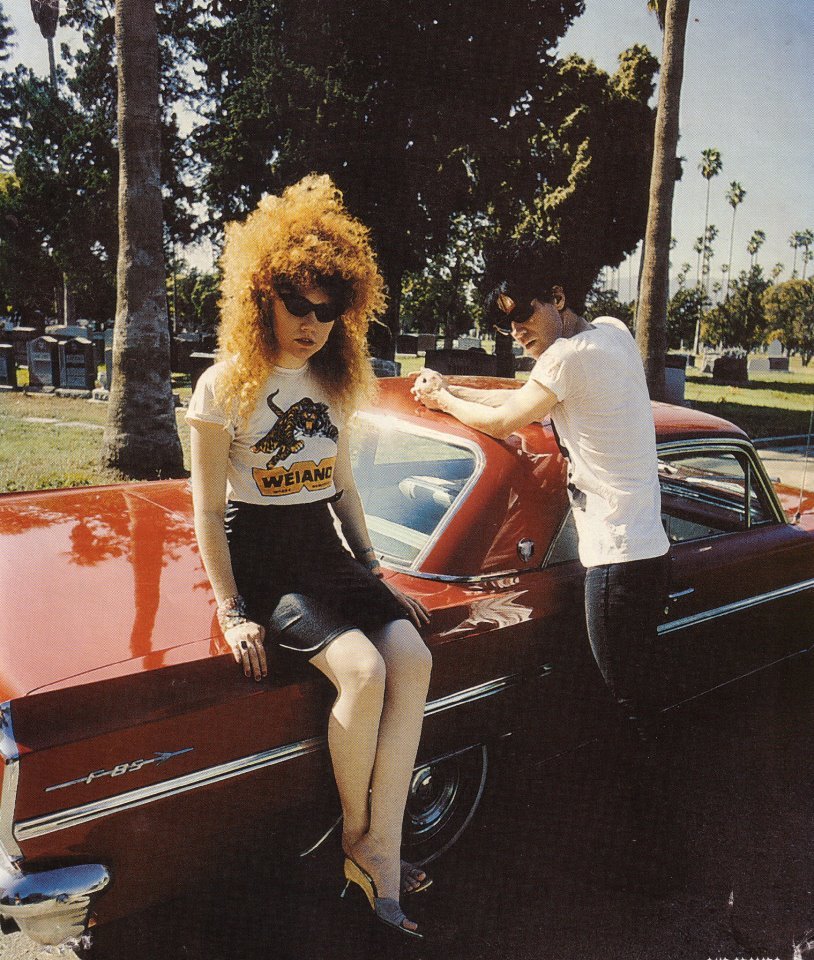
The Cramps is Psychobilly, that strange mix of rockabilly, a bit of ’77-style Punk and a lot of B-movie trash. But above all, the Cramps is rock’n’roll, an experience. Lux Interior said it himself: rock’n’roll is an emergency, a kind of folk music grounded in the blues, which is exactly what the Cramps’ music is. The Cramps’ music almost becomes a way of life, the way of trash, of exuberance, of no-limit. The Cramps is also sex in music. Music that shows just how much rock’n’roll is a sexed art. And then, the Cramps had two charismatic leaders, a man and a woman. They had the art of provocation in them, one with his tight leather pants, the other with her lace dresses. Together they formed one of the most provocative couples on the scene.
Songs the Lord Taught Us opens on the military march of “TV Set“. You can clearly see the whole paradox of the Cramps: a punk spirit in an Elvis-like style. Rockabilly, garage punk and psychedelia, it is all already there. Buddy Holly’s zombie makes its appearance on “Rock on the Moon“. And then the Cramps’ Psychobilly has its hour of glory with “I Was a Teenage Werewolf“. In a more restrained version, the band manages to channel its crazy energy and put it at the service of a grandiose track. Once again, the drums are very minimal, which only adds to the raw effect of this song. And then the chorus, like a disembodied Dick Dale, could make you dance on good old Chuck Berry’s grave. “Zombie Dance” undeniably conveys the same urge.
The Cramps go psychedelic with “Sunglasses After Dark“. The track is also more Punk than the previous ones. That is another paradox of the Cramps’ music. One “The Mad Daddy” later comes “Mystery Plane“, in my view one of the four or five great tracks on this record. “What’s Behind the Mask“, the question we will always ask about Lux Interior, then stirs several of our neurons. “I’m Cramped” (hello Druggy Pizza) is yet another hit from this album. Let me take this opportunity to recall that if the Cramps chose this name, it is above all because it evokes a sharp, intense pain. “I’m Cramped” reminds us of it with a slightly masochistic pleasure. We finally conclude with “Tear It Up“, the ultimate combination of the remains of Elvis and Dick. We stop with “Fever“, a superb cover of the song originally written by Eddie Cooley and John Davenport.
This time, I will have no trouble demonstrating the influence of the (ana)chronicled band on the current scene. The combination of gore and rock’n’roll is doing well; Nobunny and pals remind us of it every day. The White Stripes and the likes of Jon Spencer also claim it. And then, the Cramps were keen to sexualize rock’n’roll, to recall the primal side of a music that hits hard. Mission accomplished: the debate over the place of sex in music keeps raging (see, for example, the existence of She Shreds Magazine, a space dedicated solely to female guitarists).Of course, the Cramps’ discography is extremely rich, and it would be criminal to stop at Songs the Lord Taught Us. But criminality was part of the Cramps’ DNA, and if you have to start (continue and finish) with the Cramps, you might as well go for their best creation, the most authentic, the one that remains the most brutal of all. The Cramps’ ‘Bad Music for Bad People‘ shines brightly on it.
Related links:
Anachronistic article on The Gun Club
Anachronistic article on Country Teasers
Original version (French)


