
Peter Laughner (Proto Pop)
English version · automatic translation
Anachronique: Peter Laughner (Proto Pop)
Friends, it is with a heavy heart that I take up my pen again. It is always hard to do so in such circumstances. And yet it has to be done. That is the attitude I adopted earlier this year, at the time of the Charlie Hebdo killings. It is the one I embrace again. I extend my deep and sincere condolences to everyone affected by this massacre.
I am lost for words.
Peter Laughner. I promised you a more “obscure” anachronique article for this week. Here it is. And the choice of this artist is not entirely random. Peter Laughner had laughter written into his name (“you will yet learn to laugh like the immortals“), the panache of the Gods. Let us keep it within us.
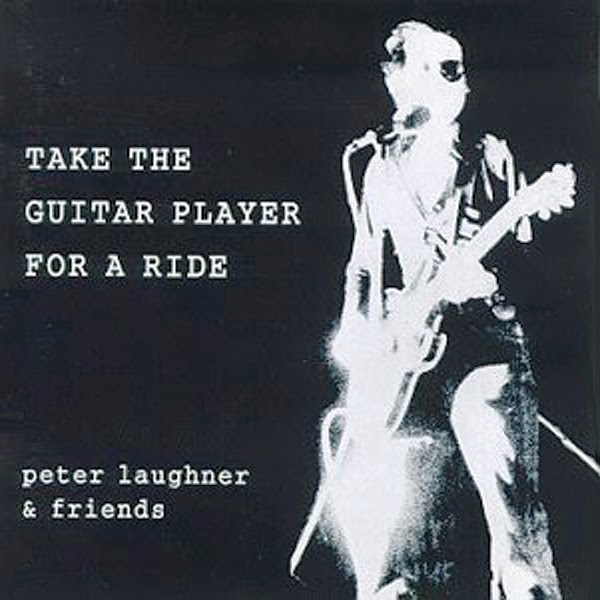
In his lifetime, Peter Laughner never released a full album under his own name. It took until 1993 for Tim/Kerr Records to release an anthology of the artist, Take the Guitar Player for a Ride. It gathers some of his creations for Rocket from the Tombs, others made for Friction or Pere Ubu, others written under his own name. Peter Laughner was a man of many projects and many connections, notably a great friend of Richard Hell and Lester Bangs. I would like to devote part of this article to his relationship with the latter which, I believe, says a lot about who they were.
Lester devoted a piece to him on the occasion of his death, “Peter Laugner Is Dead“. He was barely 24. Lester described him as “a guy in the bohemian scene in Paris around 1960, who followed all the jazz musicians, poets, and hipsters around, took all the right drugs, did and said all the right things“. Another dharma bum, in short. Their relationship was self-destructive in this way. Lester said that Peter watched over him, “Peter was looking down on me then but the sky was crying warm blood, and it may have been only that pounding in my veins at the ecstasy of being alive“. And yet Lester would ask that we keep burning our wings, living on extremes and rock’n’roll, without compromise. “Don’t anybody try to wave good-bye“, he urges us. That was the philosophy of the time, that of the greatest.
Peter Laughner was one of those hypersensitive angels. You find it in his review of Coney Island Baby, “This album made me so morose and depressed that when I got the advance copy I stayed drunk for three days. I didn’t go to work. I had a horrible physical fight with my wife over a stupid bottle of 10 mg Valiums.” It can be found in every one of his compositions.
Obviously, a lot has already been said about Peter Laughner. But let’s not hide the fact that he remains a too little-known artist. And we miss the extremists of art. That is why we will have to write about Peter again and again.
“Baudelaire” is certainly a great track in his discography. If the Beat Generation is not far off (listen to Kerouac reciting himself, the resemblances are striking), it is because Peter Laughner above all had a poet’s calling, like many of the critics at Creem Magazine. The text is available at this link (here). This track is one of the least lo-fi on the whole album. Perhaps that heightens its beauty.
“Rock It Down“, which surely influenced Tom Waits, is a more blue-grass track, almost country. And then, in his tribute to the magnificent poet “Sylvia Plath“, Peter Laughner turns to a kind of very raw folk. You find his admiration for Robert Johnson in it. But in fact you have to wait for “In the Bar” to find Peter’s essence. The track tells an epic, the story of two protagonists dancing together on the edge of death. And then his gentle acoustic guitar returns with “Cinderella Backstreet“.
“Only Love Can Break Your Heart” is just as lyrical. It is romantic and novelistic that Peter presents himself to us with this Neil Young cover. It is immediately followed by “Lullaby”, where the guitar sings us its despair. Then it’s finally “Amphetamine” that follows suit. Opened by a powerful “Take the guitar player for a ride; Never in his life been satisfied“, Peter treats us to one of his very best creations. You feel, once again, the influence of the American poets of the ’50s/’60s; “and she went up on the roof just to read the stars“.
“Life Stinks” has the advantage of being rather straightforward. He who said “If you don’t have the rhythm, you don’t have anything” at least has the courage to apply his own maxim to himself. This punk track is the most violent on the whole album. It is one of the best. Peter juggles between folk and rock’n’roll throughout his creations to finally arrive at these lines of rare animosity. “Don’t Take Your Love Away“, in the love song genre, will soften aching hearts. This track is wedged between two punk tracks, so much does “Calvary Cross” once again justify the label one might give Peter. The track is super raw, like all of Peter Laughner’s creations.
“Ain’t It Fun” was a song written by Peter Laughner and Gene O’Connor. It came out on an LP by O’Connor’s band, the Dead Boys, which we have already talked about with Frank Secich. “Dear Richard“, in a pre-CBGB style. “Baby’s on Fire“, a Brian Eno cover, reaches for brass and a more eightnies sound, pre-New Wave this time. This LP finally closes with “Me & the Devil Blues“, the most from-Mississippi track of all. A Robert Jonhson cover, it makes us think of lighting the fire and making do with the lyricism of Truman Capote.
In the end, you always find something very dark when listening to Peter Laughner’s music. It is surely the same attraction to death that Lester Bangs had. And while it is very rare for critics to make good music, this compilation proves that a few exceptions confirm the rule. It also proves that you can create any style of music and express yourself powerfully. Whether through the lyricism of his pop songs, his snarling punk or the arpeggios of his folk, Peter Laughner always tried to keep the very raw quality of his creations, which had the effect of strengthening their hold.
He had, he said, the ambition of revolutionising rock’n’roll. That, once again, is what is missing from today’s scene. We miss that artistic extremism so much. Let us try to cherish those who are still possessed by it. Some died for it, like Peter, who “at least in part he died because he wanted to be Lou Reed“.
Related links:
Article on the Dead Boys
Link to ALL the anachronique articles
Original version (French)

A l’évidence, beaucoup a déjà été dit sur Peter Laughner. Mais ne nous cachons pas qu’il demeure un artiste trop peu connu. Et puis, les extrémistes de l’art nous manquent. C’est pour cela qu’il faudra encore et toujours écrire sur Peter.
Peter Laughner – Beaudelaire
Peter Laughner – Amphetamine