
Anachronique ·

Blues Magoos (Psych Pop)
English version · automatic translation

Anachronique: Blues Magoos (Psych Pop)

The Blues Magoos were a psychedelic pop band from the Bronx. Formed in 1964, they first went by the name The Trenchcoats. They bent to the psychedelic movement in 1966 and then adopted their current line-up. They began releasing a few singles on small labels of the scene, including Ganim Records and Verve Records, before Mercury signed them.

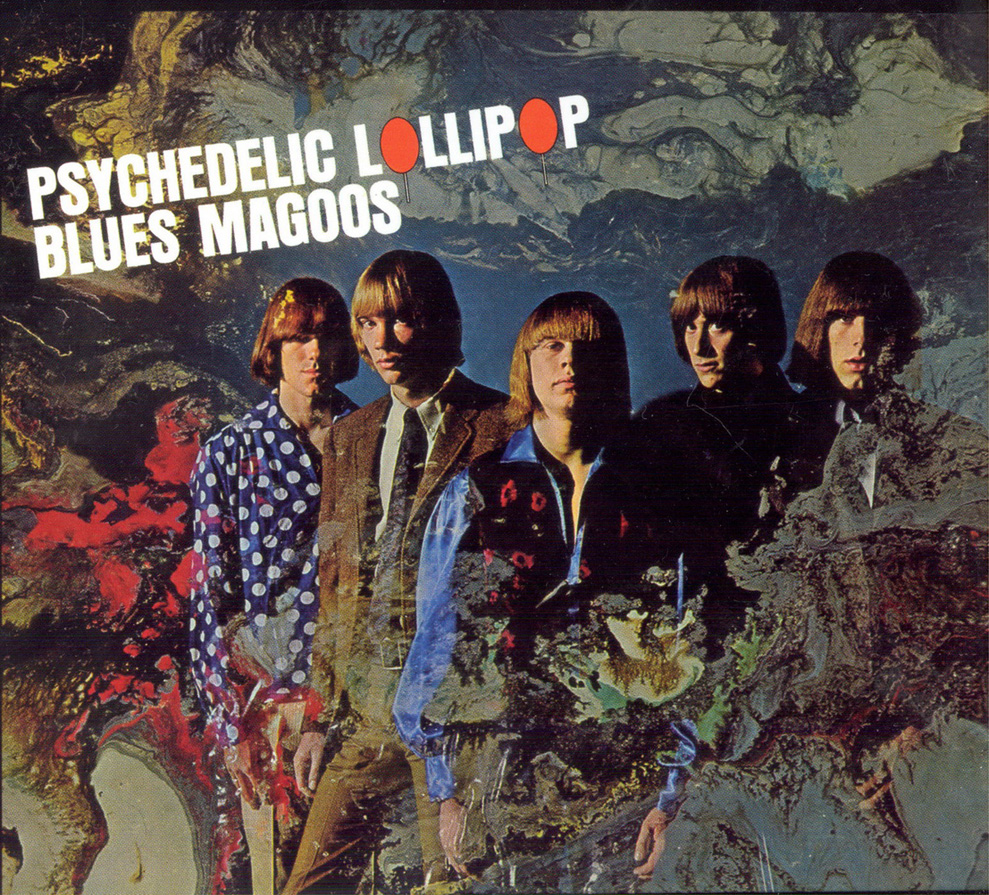
With a view to one day mapping out all the early psychedelic bands, here is a new article on one of the great representatives of the genre. While the band would release several LPs in this vein, their first, Psychedelic Lollipop, remains their best effort. From the same scene as The Electric Prunes and The Left Banke, they were notably fellow travellers of the Who and Herman’s Hermits. But perhaps their friendship with Moby Grape is more symbolic of what the Blues Magoos were, a band that bridged the scene of Cream and that of the Pebbles compilations.

“(We Ain’t Got) Nothin’ Yet“, the first track, is also the hit of this album, although to my mind it falls below the others. Number 5 in the US charts, it reflects the band’s attachment to garage. It also reflects how little experience the Blues Magoos had. Most of the members were barely out of high school when this single came out, it was hard to imagine it could truly revolutionise the genre. “Love Seems Doomed” is a far more singular song. A sort of pop ballad whose melancholy recalls some of Love’s tracks, it gracefully introduces us to the gentleness of the Blues Magoos. We find the same pre-bedroom pop intent with “Sometimes I Think About“, at the end of the album. This track is particularly strong in that it links the two scenes of the time, one still clinging to the fifties, to crooners and slow dances, the other then raging with everything that was most decadent and most… psychedelic.

“Tobacco Road” quickly shows that the band also knows its way around psych rock. While it seems to set off under the auspices of a classic tune, it quickly sweeps us into a long psychedelic jam that would make the 13th Floor Elevator turn pale. This cover of The Nashville Teens is proof that the Blues Magoos had perfect command of their subject, able to turn a classic into something more dissident. “Queen Of My Nights“, for its part, is the perfect Prom’ Night song. The Queen is beautiful and dangerous. “Worried Life Blues“ is the next stage, the moment to close the deal. It introduces, at last, the blues that the band’s name promises us. This cover of an old classic takes on a very Pink Floyd resonance (Syd Barrett era) with the Blues Magoos highly inspired. Clapton would also make something beautiful of it. And then the love story is complete with “She’s Coming Home“.

There is, on Psychedelic Lollipop, this magnificent idea of a blend between high school rock’n’roll and experimental research. The album is sometimes put down for not having (re)invented the psychedelic genre, but that is not the point. The Blues Magoos knew how to give this movement the attributes of punk music, by which I mean music interested in junk culture, in suburban life. It is also rare enough to be worth noting that two versions of the Blues Magoos competed with each other in 1969. The band had just split in 1968 when Emil Thielhelm decided to re-form the band in New York. This did not go down well with the other original members, who formed a Californian Blues Magoos. Whatever the conflicts, to this day the Blues Magoos are and will remain a formidable psychedelic band. Try not to miss their other hits, I am thinking of “Baby, I Want You” (on Electric Comic Book, released in 1967). The Blues Magoos could surprise more than a few people, and I bet that giving them a careful listen will intoxicate the taster with a Louisiana psychedelic sound with English roots.

Related links:

Article on The Deviants

Link to ALL the anachronique articles

Original version (French)

The Blues Magoos était un groupe de pop psychédélique originaire du Bronx. Formé en 1964, il officie d’abord sous le nom de The Trenchcoats. Il se pliera au mouvement psychédélique en 1966 et adoptera alors sa line-up du jour. Il commencera à sortir quelques singles sur des petits labels de la scène, dont Ganim Records et Verve Records, avant que Mercury le signe.
Dans l’optique d’avoir un jour tracé la carte de l’ensemble des premiers groupes de musique psychédélique, voici un nouvel article sur l’un des grands représentants du genre. Si le groupe fera paraître plusieurs LPs du genre, son premier, Psychedelic Lollipop, demeure son meilleur essai. De la même scène que The Electric Prunes et The Left Banke, ils auront notamment été compagnons de route des Who et d’Herman’s Hermits. Mais peut-être leur amitié avec Moby Grape est-elle plus symbolique de ce qu’étaient les Blues Magoos, un groupe qui faisait le lien avec la scène de Cream et de celle des compilations Pebbles.

“(We Ain’t Got) Nothin’ Yet“, le premier morceau est également le hit de cet album, bien qu’à mon sens en dessous des autres. 5ème des charts US, il traduit l’attachement qu’avait le groupe au garage. Il traduit également le peu d’expérience des Blues Magoos. La plupart de ses membres sortaient à peine du lycée lorsque ce single paraît, il était difficile d’imaginer qu’il puisse véritablement révolutionner le genre. “Love Seems Doomed” est un morceau bien plus singulier. Sorte de ballade pop dont la mélancolie rappelle certains titres de Love, il nous introduit avec grâce à la douceur des Blues Magoos. On retrouve cette même volonté pre-bedroom pop avec “Sometimes I Think About“, en fin d’album. Ce titre est particulièrement fort en ce qu’il fait la liaison entre les deux scènes de l’époque, celle encore accrochée aux fifties, aux crooners et aux slows, l’autre qui faisait alors rage avec tout ce qu’il y avait de plus décadent et de plus… psychédélique. 
“Tobacco Road” vient rapidement montrer que le groupe sait également y faire en matière de rock psyché. Alors qu’il semble partir sous les hospices d’un titre classique, il nous embarque rapidement dans un long jam psychédélique à faire pâlir les 13th Floor Elevator. Cette reprise des The Nashville Teens est la preuve que les Blues Magoos maitrisaient parfaitement leur sujet, capable de transformer un classique en quelque chose de plus dissident. “Queen Of My Nights“, pour sa part, est la parfaite chanson de Prom’ Night. La Reine est belle et dangeureuse. “Worried Life Blues“, c’est l’étape d’après, celle du moment de conclure. Il introduit, enfin, le blues que le nom du groupe nous promet. Cette reprise d’un vieux classique trouve une résonnance très Pink Floyd (époque Syd Barrett) avec des Blues Magoos fort bien inspirés. Clapton en fera également quelque chose de beau. Et puis, l’histoire d’amour est complète avec “She’s Coming Home“. 
Il y a, sur Psychedelic Lollipop, cette magnifique idée d’un mélange entre rock’n’roll pour high school et recherches expérimentales. L’album est parfois rabaissé pour ne pas avoir (ré)inventé le genre psychédélique, mais là n’est pas le point. Les Blues Magoos savaient comment donner à cette mouvance les attributs d’une musique punk, j’entends par là une musique qui s’intéresse à la junk culture, à la vie de suburbs. Le fait est par ailleurs suffisamment rare pour être noté, deux versions des Blues Magoos se feront concurrence en 1969. Le groupe venait de spliter en 1968 lorsqu’Emil Thielhelm décide de recréer le groupe à New York. Cela ne sera pas du goût des autres membres originaux du groupe qui formeront un Blues Magoos californien. Peu importe les conflits à ce jour, les Blues Magoos sont et demeureront un formidable groupe de musique psychédélique. Tachez de ne pas manquer ses autres hits, je pense à “Baby, I Want You” (sur Electric Comic Book, paru en 1967). Les Blues Magoos pourraient en surprendre plus d’un et je prends le pari que lui donner une écoute attentive ennivrera l’essayeur d’un son psychédélique Louisiana aux racines anglaises.
The Blues Magoos – Love Seems Doomed (1966)
The Blues Magoos – Sometimes I Think About (1966)
Liens afférents : 
Article sur The Deviants
Lien vers TOUS les articles anachroniques