
Love (Psych Pop)
English version · automatic translation
Anachronique: Love (Psych Pop)
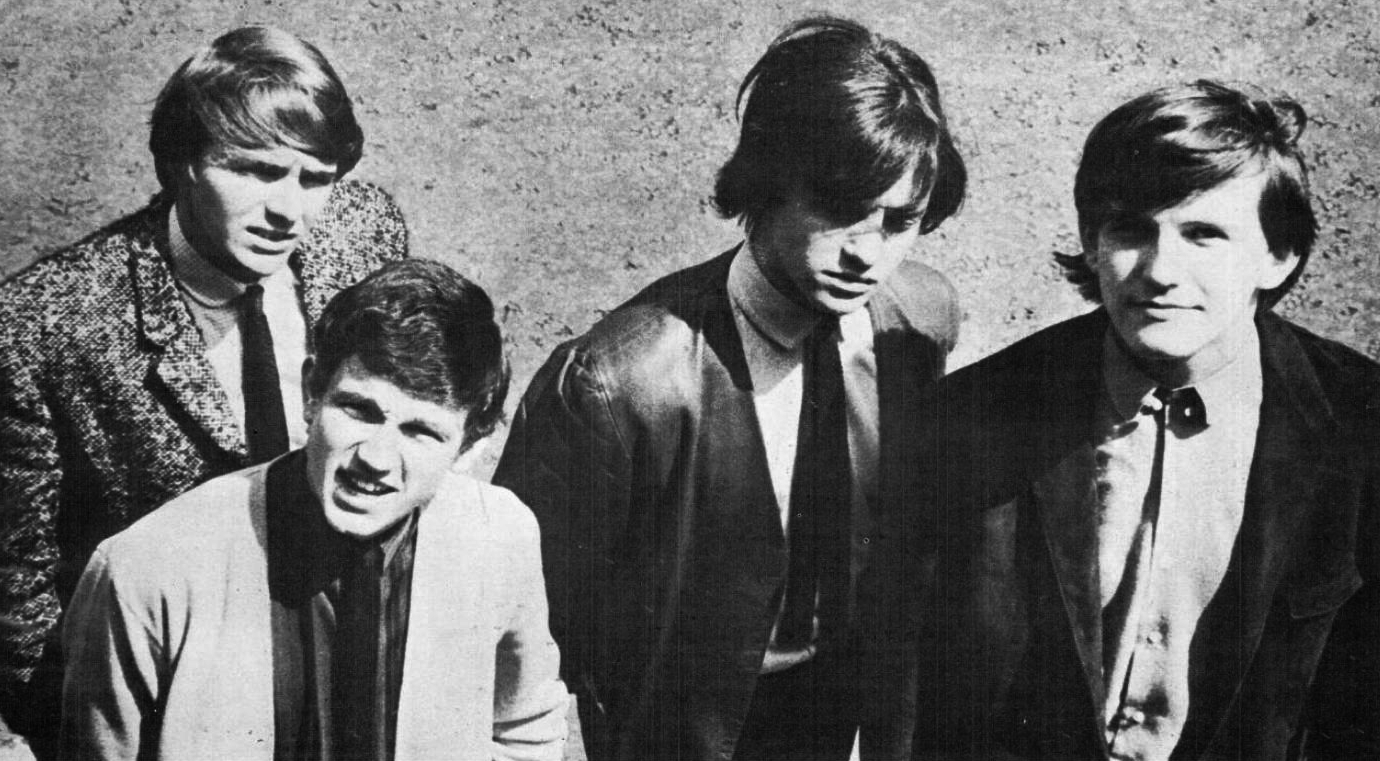
Love was a band from Memphis, formed in 1965, which (in its original line-up) released three albums. Among other things, it gave birth to the legend of its leader, Arthur Lee. Hooked on hard drugs, Lee made and unmade his band many times, before claiming to be the reincarnation of Jimi Hendrix and serving 6 years in prison. But Love was also the band of Bryan MacLean, the guitarist who wrote many of the group’s hits. In the end, the perfect balance did not last long, but there is no doubt that the magic of those few years was captured in the band’s albums.
1966 was marked by big names confirming their status: the Beach Boys with Pet Sounds, the Stones with Aftermath, Dylan with Blonde on Blonde. Meanwhile, Love made its appearance, very discreetly. It must be said that psychedelic rock was starting to grow on all sides. Other bands were making excellent use of it by pairing it with Garage sounds; I am thinking of Count Five, the Electric Prunes and the Seeds. On the other side, bands were having a field day with psych pop, with of course The 13th Floor Elevators, but also The Lovin’ Spoonful and the Chocolate Watchband. And experimentation was winning over the scene: the Velvet released the two singles “All Tomorrow’s Parties” / “I’ll Be Your Mirror“, the Fugs exploded with their self-titled record, not to mention Hendrix (“Hey Joe“), who was experimenting with his teeth.
In the end, Love remains one of the best representations of the spirit of the 1960s. Listening to this music immediately brings out all the fantasies of the era: the first lyrics about drugs, the first psychedelic melodies, and the mystique of a charismatic leader. The band’s first album, Love, came out in 1966. It was recorded between January 24 and 27 of that year, at Sunset Sound Recorders, sheltered from too strong an influence from all the bands mentioned above. It is often described as a record too unoriginal to truly stand alongside the second and third albums. On the contrary, I find it a very rhythmic LP which, under the influence of the Byrds, is full of fabulous melodies. True, Love cannot claim the power of the Beach Boys’ Pet Sounds but, in a completely different style, Love brought in some of the decade’s beautiful melodies.
Love leaves less room for the psychedelic pop trend the band would embrace on Forever Changes in 1967. The fact remains that the melodic strength of this album is greater than that of the later albums. What’s more, it is a very important album which, probably also because it came out on Elektra Records, would influence several big names on the scene. I am thinking, for example, of the guitar on “My Little Red Book”, which Syd Barrett would reproduce on “Interstellar Overdrive“.
“My Little Red Book”, precisely, the opening track, can be taken as a symbol of the 1966 scene. A sort of psychedelic Proto-Rock, it left its mark on part of that pivotal year in that it asserts that psychedelia does not necessarily go hand in hand with frenzied musical deconstruction. Further on, “No Matter What You Do” brings back that same psychedelic rock, which you also find on “Gazing“. In a style similar to The 13th Floor Elevators (article), Love seems to rush at the super catchy chorus.
At other times, Love goes for a more serene pop. That is the case on “Signed D.C.“, the band’s anti-drug anthem. It is also one of the most touching songs Love ever wrote. ‘Sometimes I feel so lonely‘, ‘No one cares for me‘, an opening line that keeps on resonating. Love also does the pop ballad with “Message To A Pretty“. As for “Softly To Me“, it could have been a great Beatles song. Rarely mentioned, this track is nonetheless a small psychedelic miracle. It carries with it a whole world that, Vanilla Fudge-style, still imposes itself on us.
As for “You’ll Be Following“, it is one of those few tracks that, without Arthur Lee’s voice, would probably be of little interest. The Byrds had already paved the way for this kind of pre-psych pop that was still too structured. Yet these few minutes are convincing, and with good reason: Arthur inhabits this track with detachment. “Colored Balls Falling” illustrates the still pre-psychedelic state of the scene. The guitar makes a timid intrusion into the track, before dissolving in the last seconds.
In the end, it will come as no surprise that many of the songs on this album are about love. The album is full of that blissful feeling, which matches the roundness of Love’s sound perfectly. The bass is particularly deep, an example for all musicians looking for musical warmth.
So as not to deprive ourselves, let’s admit that the article would be lopsided without mentioning several songs from the following albums. For example, “Stephanie Knows Who“, a sort of very Jazz answer to the Velvet’s “Stephanie Says”, and “She Comes In Colors“, are two fine tracks from Da Capo (1967). It also has very sincere compositions, as on “Orange Skies“. I particularly insist on this track, as I think it is one of those that gain the most from being listened to. You should also give some attention to “The Castle”, which has everything of an enchanting track, before “She Comes In Colors“, the song that inspired the Rolling Stones’ “She’s A Rainbow”, brings things full circle. But the album is above all marked by “Revelation“, a 19-minute track (almost unheard of at the time). Forever Changes is far more faithful to the hippie movement. The production is even more polished than on the first two albums. “Alone Again Or ?” already lets through the mystery that hangs over this album. Where do those flamenco sounds come from, what do those lyrics mean? “Bummer In The Summer” is another unavoidable Love single.
The softness of the very bedroom Pop “The Red Telephone” is also a discreet but essential piece of the band’s discography. Same remark for “The Good Humor Man He Sees Everything Like This“. In that respect the album seems closer than ever to the Beatles’ Revolver. Once again, these two albums are constantly praised, and they clearly deserve far more than these few lines. But Love is, to my mind, one of those bands you have to start listening to in chronological order; I cannot insist on this enough. In the end, the year Lennon claimed that the Beatles were
“more popular than Jesus” has many facets to discover. Love is one of them. Did “Michelle” really deserve the title of best song of 1966? Not so sure…
Related links:
Anachronique article on Syd Barrett
Link to ALL the anachronique articles
Original version (French)
D’autres fois, Love donne dans une pop plus sereine. C’est le cas sur “Signed D.C.“, l’hymne anti-drogue du groupe. C’est également l’une des créations les plus touchantes jamais composées par Love. ‘Sometimes I feel so lonely‘, ‘No one cares for me‘, une première phrase qui continue avec de résonner. Love fait également dans la ballade pop avec “Message To A Pretty“. Quant à “Softly To Me“, il aurait pu être un grand titre des Beatles. Rarement cité, ce titre est pourtant un petit miracle psychédélique. Il transporte avec lui tout un univers qui, à la Vanilla Fudge, s’impose toujours à nous.
Quant à “You’ll Be Following“, il fait partie de ces quelques morceaux qui, sans la voix d’Arthur Lee, n’auraient probablement que peu d’intérêt. Les Byrds avaient déjà tracé la route de ce genre de pop pre-psychée mais encore trop structurée. Pourtant, ces quelques minutes sont convaincantes, et pour cause, Arthur habite ce morceau avec détachement. “Colored Balls Falling” illustre l’état encore pre-psychédélique de la scène. La guitare fait une timide intrusion dans le morceau, avant de se dissoudre dans les dernières secondes.
La douceur du très bedroom Pop “The Red Telephone” constitue également une pièce discrète, mais essentielle de la discographie du groupe. Même remarque pour “The Good Humor Man He Sees Everything Like This“. L’album semble en cela plus proche du Revolver des Beatles que jamais. Une fois encore, ces deux albums sont constamment encensés, et il est évident qu’ils méritent bien plus que ces quelques lignes. Mais Love fait à mon sens partie de ces groupes dont il faut commencer l’écoute dans l’ordre chronologique, je ne saurai trop insister là dessus. Au final, l’année où Lennon affirma que les Beatles étaient
“plus populaires que Jésus” a de multiples facettes à découvrir. Love en est une. Est-ce que “Michelle” méritait véritablement le titre de meilleur morceau de l’année 1966 ? Pas si sûr…
Love – My Little Red Book (1966)
Love – Signed D.C. (1966)
Love – No Matter What You Do (1966)
Liens afférents :
Article anachronique sur Syd Barrett
Lien vers TOUS les articles anachroniques