
Anachronique ·

MC5 (Blues Rock)

English version · automatic translation

Anachronique: MC5 (Blues Rock)

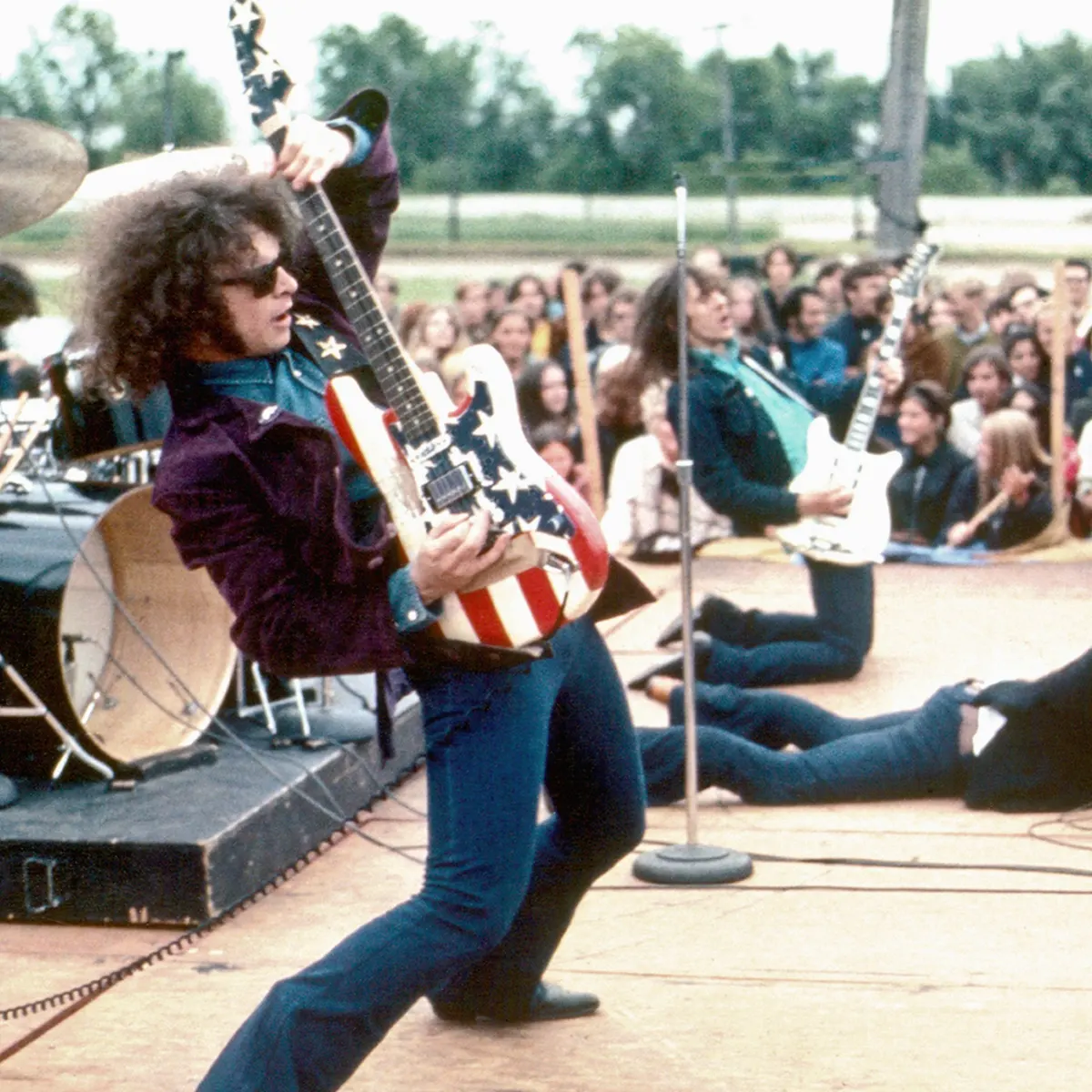
MC5, (Motor City Five). Following on from the anachronique articles already written on Blue Cheer, Television and The 13th Floor Elevators, here is the article on the legendary MC5. Makers of a psychedelic Blue Rock, the MC5 are among the most influential bands of their time. The members of the MC5 are among those who invented psychedelic music. Except that they added the power that sixties rock gave off, without forgetting to kick-start the seventies rock that was going to ravage stages worldwide. And yet in France the band doesn’t get the recognition it deserves.

Against a backdrop of praise for marijuana and LSD, the MC5 very quickly built a reputation as Hippie Rockers. Founded in 1964 by Wayne Kramer and Fred Smith while they were students, the band made a name for itself in Detroit, its hometown. Anti-establishment, the MC5 were above all renowned for their live performances. But there’s no point trying to reduce the band to a single facet of its brilliance. The MC5 are above all a band that, during its short existence, left its mark on the scene through its ability never to give what was expected of it.

Kick Out The Jams (1969) is the band’s first album. While it is in fact a Live album recorded at Russ Gibb’s Grande Ballroom in Detroit, it serves to paint a fabulous portrait of the MC5 sound. It is the MC5’s most nervy album. Released the same year as Led Zeppelin (metro), this record took part in creating a Space Rock that leans towards Punk. It opens with “Ramblin’ Rose“, a song that will surprise unwarned ears every time. Rob Tyner does warn us, though, “I’ll Give You a Testimonial”. But there’s nothing to be done, the MC5 cannot be pinned down. “Kick Out The Jams” is to this day the band’s best-known song. Its opening motherfucker even got it censored on the American continent. Today, the number of covers is beyond counting. Soon after comes “Come Together“, a psychedelic orgy where the flowers all have thorns. The whirlwind continues with “Rocket Reducer No. 62 (Rama Lama Fa Fa Fa)“. And then it’s the turn of one of the album’s masterpieces, “Motor City Is Burning“. Forget what you know about Rock, close your eyes, and be ecstatic. We end with “Starship“, a track of over eight minutes that left its mark on the History of Blues Rock. Hold on tight, the guitar of Fred “Sonic” Smith (then married to Patti Smith) quickly turns the track into a breathtaking piece of Experimental Rock. Not for the faint-hearted. Kick Out The Jams is Hard Rock in the original sense of the term, it is a record packed with testosterone, it is very strong!

Back In The USA (1970) is the MC5’s first studio record. “Tutti-Frutti” comes as a surprise after listening to Kick Out The Jams. “Teenage Lust” gets things back on track with a deeper sound. And then we find one of the finest songs of the decade with “Let Me Try“. Rob Tyner’s voice is transcended. The lyrics never fade, “I’ll be your singer; You’ll be my song; I’ll lay you down softly; I’ll love you long“. Disconnected from everything the MC5 ever did, this song is a hidden gem in the middle of an ocean of devastating sounds, which makes its presence all the more sublime. “Looking At You” then cuts us off in our tracks. But the song remains one of the MC5’s best, which helps the pill go down. “High School” follows straight after. It is one of the band’s most playful releases. Unmissable. “Call Me Animal” then initiates us into Proto Punk. The last track, “Back In The USA“, brings us full circle to the first song.

High Time (1971) is the MC5’s last album. From the opening with “Sister Anne” you understand that this album will lean more towards Punk. At least in part, because let’s not forget that this track runs over 7 minutes, which isn’t really the habit of bands of the genre. The band’s romantic side reappears on “Miss X“, while the Blue Cheer trend makes a break for it with “Gotta Keep Movin’“. “Future, Now” is proof that the MC5 are still Detroit’s sulphurous children. It is ultimately very The Amboy Dukes. To our great surprise, we come up against a spacey interlude that leaves us in the unknown. The track finally ends in this rather strange spectral atmosphere, as if Vanilla Fudge had passed through. “Over And Over” and “Skunk (Sonicly Speaking)” are the MC5’s last two tracks. The two guitars on the latter are enough to leave the best taste in your mouth. The song even ends with a brass concert, like a nod to the band’s very beginnings, when it started out linking free jazz and hard rock. But perhaps less punchy, this album marked the beginning of the end for the band, which finally split for good on December 31, 1972.

The MC5 are a band without which the Stooges would never have been what they were (and only because one of its members saved Iggy Pop from an overdose). The same goes for the New York Dolls. The MC5, a professed inspiration for Ty Segall, John Dwyer and the other legends of the 2010′s, are certainly an essential part of these anachronique articles.

Related links:

Links to ALL the anachronique articles

Mixtape #4: High School is Forever (with the MC5)

Original version (French)

MC5, (Motor City Five). Dans la lignée des articles anachroniques déjà écrits sur Blue Cheer, Television et The 13th Floor Elevators, voici l’article sur le légendaire MC5. Auteur d’un Blue Rock psychédélique, les MC5 font partie des groupes les plus influents de leur époque. Les membres du MC5 sont de ceux qui ont inventé la musique psychédélique. Seulement, ils y ont rajouté la puissance que le rock sixties dégageait, sans oublier d’amorcer le rock seventies qui aller ravager les scènes mondiales. Pourtant, le groupe n’a pas en France la reconnaissance qu’il mérite.
Sur fond d’apologie à la marijuana et au LSD, les MC5 vont très vite se construire une réputation d’Hippie Rockeur. Fondé en 1964 par Wayne Kramer et Fred Smith alors qu’ils sont étudiants, le groupe se fait connaître à Détroit, sa ville natale. Anti-establishment, les MC5 étaient avant tout réputés pour leurs performances lives. Mais inutile de chercher à réduire le groupe à un seul aspect de son éclat. Les MC5, c’est avant tout un groupe qui, durant sa courte existence, aura marqué la scène par sa capacité à ne jamais donner ce que l’on attendait de lui.
Kick Out The Jams (1969) est le premier album du groupe. S’il est en fait un album Live enregistré au Russ Gibb’s Grande Ballroom de Détroit, il servira à dresser un fabuleux portrait du son des MC5. Il est l’album le plus nerveux des MC5. Sortit la même année que le Led Zeppelin (métro), cet opus participe de la création d’un Space Rock qui tire vers le Punk. Il s’introduit sur “Ramblin’ Rose“, un morceau qui surprendra à chaque fois les oreilles non prévenues. Rob Tyner prévient pourtant, “I’ll Give You a Testimonial”. Mais rien à y faire, les MC5 ne peuvent être appréhendés. “Kick Out The Jams” est à ce jour le titre le plus connu du groupe. Son motherfucker introductif lui vaudra même d’être censuré sur le continent américain. Aujourd’hui, on n’en compte plus le nombre de reprises. Vient ensuite rapidement “Come Together“, une orgie psychédélique où les fleurs ont toutes des épines. Le tourbillon continue avec “Rocket Reducer No. 62 (Rama Lama Fa Fa Fa)“. Et puis, c’est au tour de l’un des chefs-d’oeuvre de l’album, “Motor City Is Burning“. Oubliez ce que vous savez sur le Rock, fermez les yeux, et extasiez-vous. On finit sur “Starship“, un titre de plus de huit minutes qui aura marqué l’Histoire du Blues Rock. Tenez vous bien, la guitare de Fred “Sonic” Smith (alors marié à Patti Smith) tourne rapidement le titre en une pièce de Rock Expérimental à couper le souffle. Petites natures s’abstenir. Kick Out The Jams, c’est le Hard Rock au sens premier du terme, c’est un opus bourré de testostérone, c’est très fort !
Back In The USA (1970) est le premier opus studio des MC5. “Tutti-Frutti” surprend après l’écoute de Kick Out The Jams. “Teenage Lust” vient redresser la barre avec un son plus profond. Et puis, on trouve un des plus beaux titres de la décennie avec “Let Me Try“. La voix de Rob Tyner y est transcendée. Les paroles ne s’effacent jamais, “I’ll be your singer; You’ll be my song; I’ll lay you down softly; I’ll love you long“. Déconnecté de tout ce que les MC5 ont pu faire, ce morceau est une perle cachée au milieu d’un océan de sons dévastateurs, ce qui sublime encore plus sa présence. “Looking At You” vient ensuite nous couper dans notre élan. Mais le titre demeure l’un des meilleurs des MC5, ce qui aide à faire passer la pilule. “High School” suit dans la foulée. C’est l’une des parutions les plus ludiques du groupe. Immanquable. “Call Me Animal” vient ensuite nous initier au Proto Punk. Le dernier titre, “Back In The USA“, boucle la boucle du premier morceau.
High Time (1971) est le dernier album des MC5. Dès l’introduction avec “Sister Anne” on comprend que cet album sera plus tourné vers le Punk. En partie tout au moins, car n’oublions pas que ce titre dépasse les 7 minutes, ce qui n’est pas vraiment dans l’habitude des groupes du genre. La romance du groupe réapparait sur “Miss X“, tandis que la mouvance Blue Cheer se fait la belle avec “Gotta Keep Movin’“. “Future, Now” est la preuve que les MC5 sont toujours les enfants sulfureux de Détroit. C’est finalement très The Amboy Dukes. A notre grande surprise, on se trouve confronté à un interlude planant qui nous laisse dans l’inconnu. Le titre se conclut finalement sur cette atmosphère spectrale assez étrange, comme ci les Vanilla Fudge étaient passés par là. “Over And Over” et “Skunk (Sonicly Speaking)” sont les deux derniers titres des MC5. Les deux guitares sur le dernier cité ont de quoi laisser le meilleur gout en bouche. Le morceau se conclut même sur un concert de cuivres, comme un clin d’oeil aux tout débuts du groupe qui avait commencé en liant free jazz et hard rock. Mais peut-être moins percutant, cet album marquera le début de la fin du groupe, qui finira par se séparer définitivement le 31 décembre 1972.
Les MC5, c’est un groupe sans lequel les Stooges n’auraient jamais été ce qu’ils ont été (et puis seulement car un de ses membres à sauver Iggy Pop d’une overdose). Il en va de même pour les New York Dolls. Les MC5, inspiration revendiquée de Ty Segall, John Dwyer et des autres légendes des années 2010′, c’est assurément un indispensable de ces articles anachroniques.

MC5 – Motor City Is Burning (1969)
MC5 – Let Me Try (1970)
Liens afférents :
Liens vers TOUS les articles anachroniques
Mixtape #4: High School is Forever (avec les MC5)